
What’s the most underrated movie you’ve ever watched?
View all responses
I’ve got two answers to this question, and I suspect some people are going to disagree with my second choice. But I think there’s a difference between a movie being popular and a movie being properly appreciated. And there are some films that deserve more recognition, even if practically everyone has seen them.
My first choice is a movie that gets lost among the masterpieces of one of cinema’s greatest directors. The second is a movie almost everyone knows, but I think too many people appreciate it for only a fraction of what makes it extraordinary.
Rope (1948)
 Ask someone to name a great Alfred Hitchcock movie, and you’ll probably hear Psycho, The Birds, Rear Window, Vertigo or North by Northwest. All are deserving of their reputations. But one of Hitchcock’s most masterfully crafted films rarely comes up in those conversations.
Rope stars Jimmy Stewart, John Dall and Farley Granger in a story about two young men who murder a former classmate, stuff his body into a chest in their apartment and then host a dinner party for friends and family of the victim. To make matters worse, they serve dinner from the very chest containing the body.
We know where the body is. The dinner guests don’t. And Hitchcock uses that knowledge to create almost unbearable suspense.
But what makes Rope extraordinary is the way Hitchcock filmed it. He wanted the movie to unfold like a stage play, with the action taking place in real time and the camera seemingly never stopping. The problem was that movie cameras in 1948 could hold only about ten minutes of film at a time.
So Hitchcock devised an ingenious solution. He filmed lengthy, continuous takes and disguised several of the necessary cuts by moving the camera into the back of an actor’s jacket or another object that completely filled the screen. When the next shot began, the camera moved away, creating the illusion of uninterrupted action.
 The result is a film that feels almost like watching a theatrical performance, except that Hitchcock is constantly controlling exactly where we’re looking. Instead of relying on conventional editing, he choreographed the movements of the camera and actors to tell the story. The sets even had movable walls to accommodate the enormous cameras.
And it works brilliantly.
Dall’s character is smug and almost giddy over having committed what he believes is the perfect murder. Granger’s character is unraveling under the pressure. Stewart, playing their former teacher, gradually begins to suspect what has happened.
The screenplay is sharp, the performances are outstanding, and Hitchcock’s direction is remarkable. The filmmaking technique could have been nothing more than a gimmick, but instead it heightens the tension and makes us feel as trapped in that apartment as the characters themselves.
It’s a masterpiece of suspense and one that deserves to be mentioned far more often when people discuss Hitchcock’s greatest achievements.
It’s a Wonderful Life (1946)
Now for the one that might raise some eyebrows.
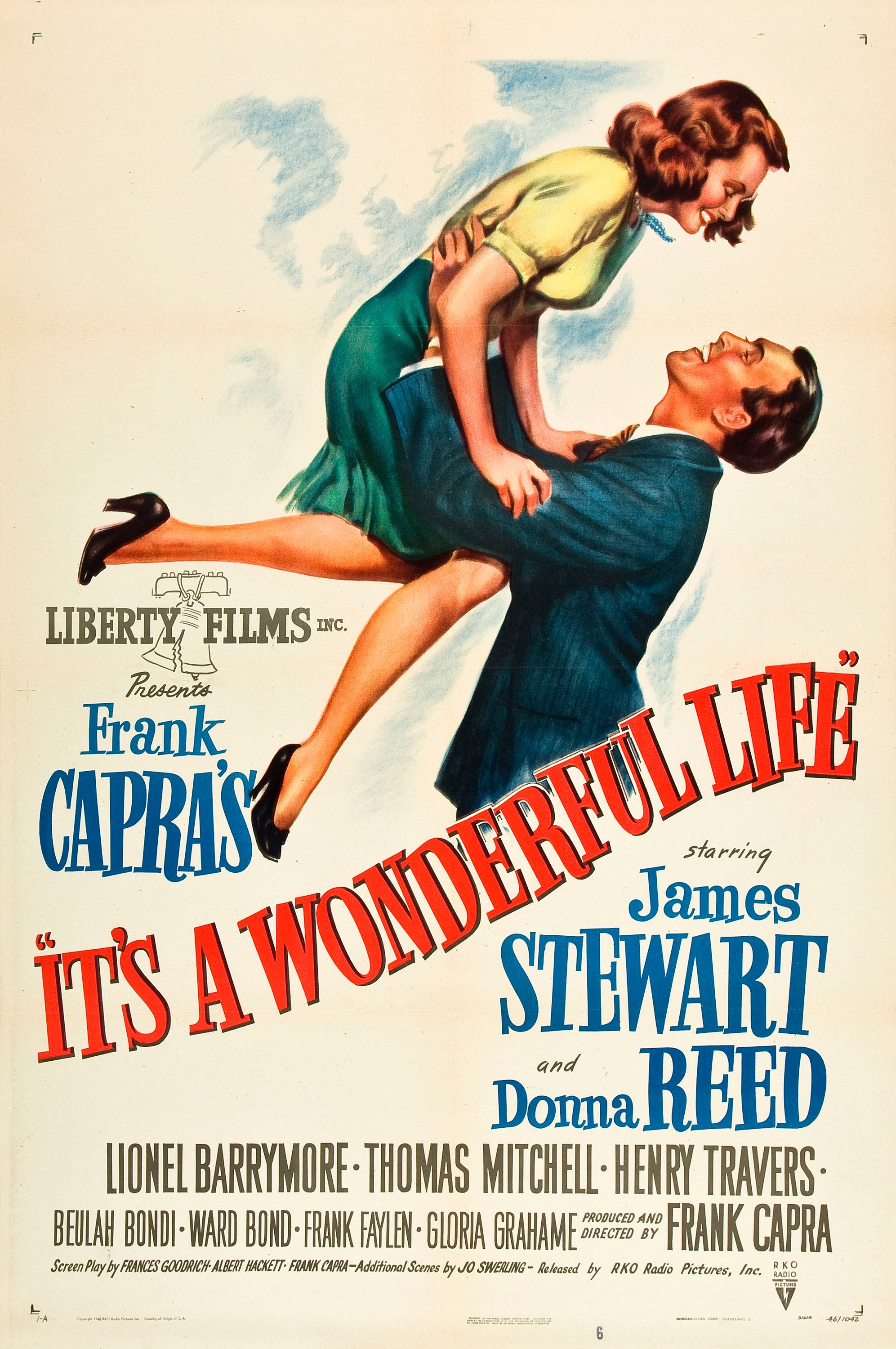 How can It’s a Wonderful Life possibly be underrated? It’s one of the most beloved Christmas movies ever made. It’s shown on television every December, generations of families have made watching it an annual tradition, and practically everyone knows George Bailey and Clarence the angel.
I’ll concede all of that. But I also think that calling it a great Christmas movie doesn’t begin to do it justice.
It’s a Wonderful Life is one of the greatest movies ever made. Period.
Interestingly, audiences didn’t necessarily see it that way when it was released in 1946. Although it received some favorable reviews and five Academy Award nominations, it also received criticism and failed to recover its production costs. Its status as a beloved Christmas tradition came much later.
But what makes the film extraordinary isn’t simply its heartwarming ending or its message about the value of one man’s life. It’s the magnificent craftsmanship that Frank Capra brought to nearly every aspect of the production.
Consider the screenplay.
George Bailey spends his entire life dreaming of getting out of Bedford Falls, traveling the world and accomplishing great things. Instead, one circumstance after another keeps him home. He gives up his college education for his brother, sacrifices his honeymoon to save the Building and Loan, and repeatedly puts the needs of others ahead of his own ambitions.
By the time we reach that terrible Christmas Eve when George believes everyone would be better off without him, we understand exactly how he got there. Capra has spent nearly two hours showing us the accumulation of disappointments and sacrifices that brought George to the brink of despair.
 And when Clarence finally shows him what the world would have been like without him, the emotional payoff is enormous because the story has earned it.
But there’s another aspect of the movie that I think modern audiences often overlook.
Capra carefully placed George Bailey’s life against the backdrop of events that his original audiences would have experienced themselves.
Early in the film, young George discovers that Mr. Gower, the town druggist, has received a telegram informing him that his son has died of influenza. The scene takes place in 1919, during the era of the devastating Spanish flu pandemic. Audiences in 1946 would have remembered that tragedy, and many would have known families who lost loved ones.
Later, we see the optimism of the Roaring Twenties, the Charleston dance craze and the excitement of a generation convinced that anything was possible.
Then comes the Great Depression. When panicked customers descend on the Building and Loan demanding their money, George explains that their savings aren’t sitting in a vault. They’re invested in the homes and lives of their neighbors. It’s a powerful scene, but imagine how it must have resonated with audiences who had actually lived through bank failures and financial ruin.
And then comes World War II. Harry Bailey becomes a decorated war hero while George, unable to serve because of his hearing loss, remains in Bedford Falls and contributes to the war effort at home. Those scenes would have been especially meaningful to an audience emerging from a war that had ended only a year earlier.
These weren’t just convenient historical references. They helped make George Bailey’s story the story of an entire American generation.
Much of that context is lost on modern audiences. We can still appreciate the scenes, but we don’t experience them the way people did in 1946. Capra was speaking directly to people who had lived through those events, and he understood how to make their experiences part of George Bailey’s life.
Then there are the performances. Jimmy Stewart is extraordinary as George, moving from youthful enthusiasm to frustration, bitterness and finally despair. Donna Reed brings warmth and strength to Mary, and Lionel Barrymore creates one of cinema’s most memorably despicable villains in Mr. Potter.
And the direction is remarkable. Capra knows when to make us laugh, when to let a scene breathe and when to allow the weight of George’s disappointments to become almost unbearable. He makes Bedford Falls feel like a real community, populated by people whose lives matter to one another.
Of course, the ending is sentimental. I wouldn’t want it any other way.
But the sentimentality works because everything that precedes it has been so carefully constructed. Capra doesn’t simply tell us that George Bailey has lived a wonderful life. He spends the entire movie proving it.
And that’s why I think It’s a Wonderful Life remains underrated, even though it has earned recognition on lists of the greatest American films.
People love it as a Christmas movie. I just wish more people recognized it as a masterpiece of American cinema.
Two Very Different Masterpieces
What fascinates me about these two films is how differently their directors accomplished their goals.
Hitchcock used an unusual filmmaking technique to make an audience feel trapped inside an apartment with a murderer.
Capra used decades of American history, carefully developed characters and a wonderfully structured screenplay to make an audience feel as though it had lived an entire lifetime alongside George Bailey.
In Rope, the craftsmanship is so unusual that you can’t help noticing it.
In It’s a Wonderful Life, the craftsmanship is so effective that you might not notice it at all.
Perhaps that’s what makes a movie underrated. Sometimes we overlook greatness because nobody remembers the movie. Other times we overlook greatness because we’ve seen it so many times that we forget just how extraordinary it is.
Enjoyed this? Subscribe and get future reflections, bourbon notes, and assorted nonsense delivered straight to your inbox.
Copyright © 2026 Doug DeBolt.
