Worth the Watch?
 Some movies stay with us long after the credits roll. Sometimes it’s because of the story, sometimes because of the performances, and sometimes because of where we were and who was sitting beside us when we first saw them.
For me, Arthur is all three.
In 1981, my dad had a habit of coming home and announcing that we were going to the movies. We lived in Fort Walton Beach, Florida, and Cinco Cinema was about five minutes from our house. Dad was friends with the couple who owned the theater, and they’d given him a pass that allowed him to see any movie he wanted, whenever he wanted. Truthfully, he probably didn’t need the pass. Everybody there knew him.
One afternoon, Dad came home and announced that we were going to see Arthur.
I can still remember sitting in that theater as the Orion Pictures logo appeared on the screen, that big O circling against the stars. Then came the opening notes of Christopher Cross singing “Arthur’s Theme (Best That You Can Do),” and I was hooked before Dudley Moore ever appeared.
Christopher Cross. Dudley Moore. The stars in the sky. And my dad sitting beside me.
Perfect.
The irony is that Dad and I weren’t especially close. I was a lot like my mother, which probably created some distance between us. Dad was Fred Flintstone, and Mom had absolutely no interest in playing Wilma. But those afternoons at the movies gave us something to share, and they’re among my favorite memories of him.
And Arthur became one of my favorite movies.
Dudley Moore was magnificent as Arthur Bach, a fabulously wealthy alcoholic who somehow managed to be charming, funny and lovable when he probably should have been unbearable. John Gielgud was even better as Hobson, Arthur’s acerbic butler and surrogate father, delivering some of the funniest lines in movie history with the dignity of a man addressing Parliament.
The movie was close to perfect.
I have only one significant complaint, and it’s Liza Minnelli. She’s fine as Linda, Arthur’s working-class love interest, but I’ve always felt that she was playing a version of Liza Minnelli rather than disappearing into the character. Debra Winger reportedly turned down the role, and I’ve spent decades wondering just how wonderful she might have been opposite Moore.
On the other hand, Jill Eikenberry was absolutely perfect as Susan, Arthur’s intended bride. More about her in a moment.
So when Arthur 2: On the Rocks arrived in 1988, I wanted desperately to like it. I didn’t see it in the theater, but eventually rented it on video, hoping it would be better than the disappointing reviews suggested.
It wasn’t.
For years, I regarded Arthur 2 as one of those sequels that should never have been made. Then, this weekend, I stumbled across it on Howdy. It was free, and nearly four decades had passed since I first watched it. I remembered a handful of scenes that weren’t bad, and I wondered whether time and a little perspective might have changed my opinion.
They had. Just not as much as I might have hoped.
The Trouble With Following Perfection
The first problem arrives before the story really gets going.
Chris de Burgh provides “Love Is My Decision,” a perfectly pleasant song that tries to capture some of the magic of Christopher Cross’s original theme. Somewhere along the way, we even get a musical reminder of the moon and New York City, as if the filmmakers want to reassure us that we really are back in Arthur Bach’s world.
But the magic isn’t there. It’s not that de Burgh’s song is bad. It just has the misfortune of following something unforgettable. And that’s the problem with much of Arthur 2.
Steve Gordon, who wrote and directed the original, died in 1982. His absence is felt throughout the sequel. Director Bud Yorkin seems determined to recapture Gordon’s magic by recreating scenes, repeating familiar jokes and reminding us of everything we loved about the first film.
Unfortunately, reminding us of a better movie isn’t the same thing as making another good one.
Too often, just as I found myself enjoying Arthur 2, another recycled moment would pull me out of the experience. Instead of laughing at something new, I was thinking about how much better the original scene had been. And that’s a shame, because Dudley Moore was still perfectly capable of being Arthur Bach.
Arthur Is Still Arthur. Unfortunately.
Moore hadn’t lost his comic timing, his charm or his ability to make a wealthy, drunken man-child surprisingly endearing. In fact, there are some genuinely funny moments scattered throughout the sequel.
His adventures in a hardware store, a bar, a homeless shelter and an apartment building all produced more laughs than I remembered. There’s also a wonderful moment when Moore sits at a piano and sings about fabricated half-inch pipe. It’s easy to forget what a gifted musician he was, and yes, that’s really Moore playing the piano in both movies.
But the screenplay gives him precious little opportunity to grow.
At the beginning of the sequel, Arthur and Linda are married, and Arthur is still drinking as though nothing has changed since 1981. The wealthy playboy has become a husband, yet he remains essentially the same lovable drunk.
That worked beautifully in the original. But shouldn’t seven years, a marriage and the possibility of fatherhood have changed him at least a little?
I would have loved to see Arthur begin the sequel as a reformed man. Then, when Burt Johnson’s schemes destroy his financial security, the pressure might drive him back to the bottle. His eventual decision to stop drinking would represent a genuine struggle and a meaningful victory.
Instead, Arthur spends most of the film behaving exactly as he always has, only to discover near the end that perhaps it’s time to grow up. It’s a nice development, but it feels forced because the movie hasn’t really earned it.
What Happened to Susan?
Another significant problem is the recasting of Susan Johnson.
In the original, Jill Eikenberry played Susan as almost impossibly sweet. She was devoted to Arthur despite his glaring faults, constantly trying to rescue him from himself. Her affection was so earnest that it bordered on cloying, which made her the perfect woman for Arthur not to marry. We understood why he should have loved her. We also understood why he didn’t.
Cynthia Sikes takes over the role in the sequel, and she’s an entirely different Susan. Taller, more glamorous and considerably colder, she approaches life with the businesslike precision of someone who expects everything to go according to plan. In other words, she’s exactly the kind of person Arthur would avoid.
This Susan seems much more like her domineering father, Burt Johnson, who is once again played by Stephen Elliott. Arthur would be a perpetual embarrassment in her world, a hopelessly irresponsible husband whose behavior she’d constantly have to explain away.
So why is she still obsessed with marrying him? And why is Burt so determined to destroy Arthur financially, only to engineer a situation that might bring him back into Susan’s life? I can believe Burt wants revenge for the humiliation Arthur caused his daughter. But does he seriously believe this man will ever become a suitable member of his business empire?
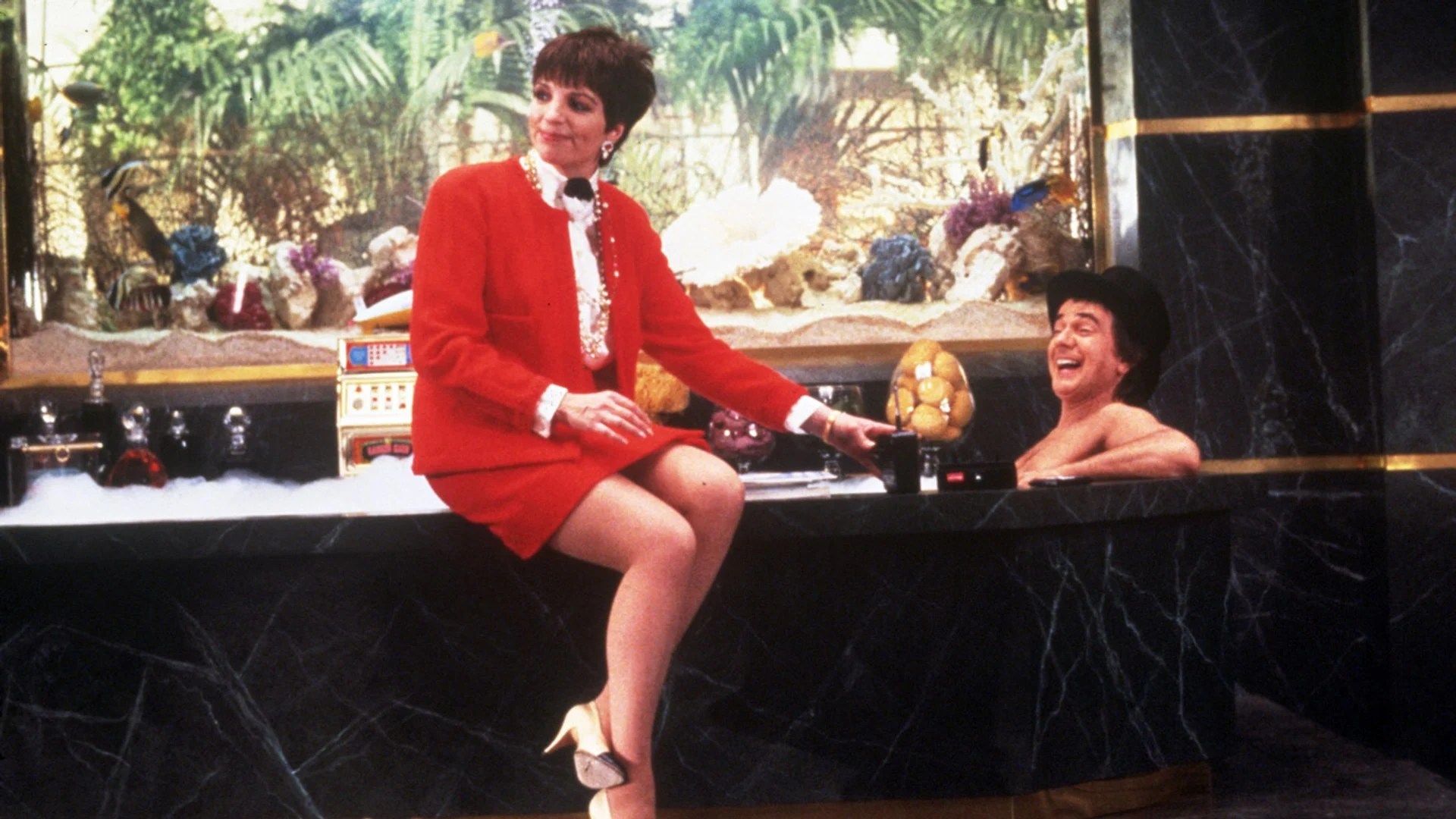 The entire scheme strains credibility.
Interestingly, Liza Minnelli is better in the sequel. She seems more comfortable as Linda, and the marriage between Arthur and Linda feels surprisingly natural. They belong together, even if Arthur remains frustratingly immature.
I only wish the filmmakers had given Linda’s father, played by Barney Martin, more to do. He was one of the funniest supporting characters in the original, and his diminished role is another missed opportunity.
The Man Who Made Arthur Special
Of course, the greatest absence in Arthur 2 is John Gielgud.
Hobson died in the original, and with him went much of what made that movie extraordinary. His relationship with Arthur was the heart of the story. The barbed exchanges, the dry wit, the barely concealed affection beneath the insults—everything worked because Moore and Gielgud understood their characters so completely.
Arthur has a new butler, Fairchild, played by Paul Benedict. He’s stiff, formal and utterly humorless, which sounds rather like Hobson. But where Hobson’s rigid exterior concealed tremendous affection and a wicked sense of humor, Fairchild spends most of the sequel hovering around the edges of the story.
Until the end. And that’s where Arthur 2 finally begins to find some of the magic it had been missing.
Spoilers ahead: The following discussion reveals several developments from the film’s ending.
Late in the film, Hobson returns in a ghostly encounter with Arthur. For a few glorious minutes, Moore and Gielgud are reunited, and the chemistry is still there. Suddenly, we’re watching Arthur again.
Not because someone is recycling an old joke or recreating a familiar scene, but because these two actors understand something essential about their characters.
Hobson’s revelation about Arthur having had a son also provides one of the sequel’s most touching moments. When Arthur realizes what’s being suggested, he protests, “Old man, you’re not playing fair.”
It’s the kind of exchange that reminds us why we loved these characters in the first place. And it provides an emotional foundation for Arthur’s decision to become the father he knows he should be.
Finding Something Worth Saving
The adoption storyline is actually one of the sequel’s better ideas.
Arthur and Linda desperately want a child, and Kathy Bates makes a memorable appearance as Mrs. Canby, the woman handling their adoption. Her concerns about Arthur’s drinking are entirely reasonable, even if the movie sometimes seems determined to treat his alcoholism as little more than an amusing personality trait.
The ending offers a series of welcome surprises, including the arrival of an adopted daughter and Linda’s revelation that she’s pregnant. It’s sentimental, certainly, but it works.
So does the final exchange between Arthur and Fairchild.
Throughout the film, Arthur has desperately wanted his new butler to loosen up and develop a sense of humor. The irony is that Hobson was never particularly loose himself. But Arthur misses the playful relationship they shared and wants Fairchild to fill that enormous void.
Finally, Fairchild attempts a practical joke, only to have Arthur apparently respond by firing him. It’s a wonderful double-switch. Arthur is actually delighted that Fairchild has finally shown some personality, and he rewards him by moving him into Hobson’s old room.
There’s genuine affection in the moment, along with the suggestion that both men have grown a little. It’s sweet. It’s funny. And it’s exactly the kind of character development that much of the movie needed. Unfortunately, it arrives far too late.
The Final Cut: Worth the Watch?
 I went into this revisit expecting to dislike Arthur 2: On the Rocks as much as I had nearly 40 years ago. I didn’t.
There were more laughs than I remembered, more touching moments than I’d given the movie credit for, and a handful of performances and scenes that deserved better than my original dismissal.
But I also came away convinced that Steve Gordon’s absence was an enormous loss. Bud Yorkin tried to resurrect the magic of the original without quite understanding where that magic came from. Too much of the sequel is devoted to reminding us of what we loved instead of giving us something new to love.
Would I watch it again? Perhaps, but not anytime soon. And if I do, I’ll probably watch the original first.
Would I recommend it? To someone who loves Arthur, certainly. There’s enough here to make spending a couple of hours with these characters worthwhile, especially if you haven’t seen the sequel in a long time.
But to someone who has never seen the original? Absolutely not. Start with the 1981 masterpiece. Get to know Arthur, Linda and Hobson as Steve Gordon intended. Then, if you find yourself wanting another visit with them, give Arthur 2 a chance.
Just keep your expectations in check. (And avoid the 2011 remake at all costs. That’s another review entirely.)
My ratings:
Arthur (1981): 9.5/10 — A nearly perfect comedy, filled with wonderful performances, unforgettable dialogue and a surprising amount of heart.
Arthur 2: On the Rocks (1988): 6/10 — Some genuine laughs and a few touching moments, but too dependent on the original to stand on its own.
Arthur 2 isn’t horrible. But it isn’t particularly good, either.
I haven’t fallen in love with it. I’ve just fallen out of hate with it. And sometimes, I suppose, that’s enough.
Enjoyed this? Subscribe and get future reflections, bourbon notes, and assorted nonsense delivered straight to your inbox.
Copyright © 2026 Doug DeBolt.
