


If I could go back and witness any historical event, I think I would choose Philadelphia in the summer of 1776, when the Declaration of Independence was debated, adopted and signed.
There are plenty of other moments that would be incredible to witness. I could stand at Gettysburg and hear Abraham Lincoln deliver a speech that lasted only a couple of minutes but outlived nearly everything else said that day. I could sit in Mission Control and hear, “The Eagle has landed.” I could watch the Berlin Wall come down.
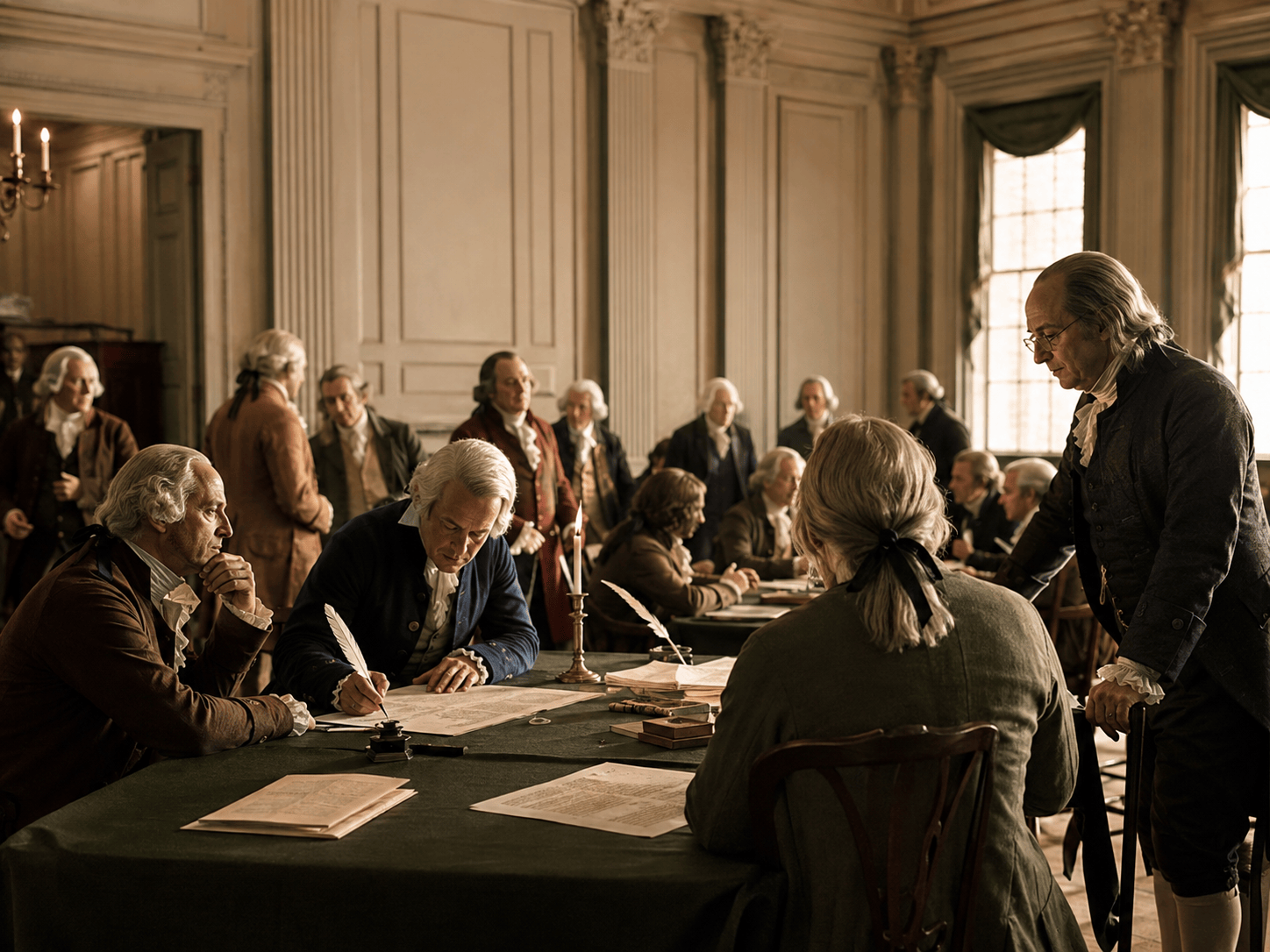 But there is something about that room in Philadelphia that fascinates me. Part of it is because we know the ending.
We know the colonies won the war. We know the United States survived. We know the words written in that document became some of the most famous in history. We know names like Jefferson, Adams, Franklin and Hancock because of what happened there.
They didn’t know any of that.
That may be the part I would most want to experience.
History has a way of looking inevitable after the fact. We see paintings of solemn men gathered around a table, signing their names beneath words that would create a nation, and it almost feels as though everyone in the room knew exactly what they were doing and exactly where it would lead.
They couldn’t have seen that because they were the subjects of the paintings.
They were challenging one of the most powerful nations on earth. They were committing themselves to a war they might very well lose. If the rebellion failed, those signatures weren’t going to be remembered as acts of patriotism. They were evidence of treason.
I would want to see their faces. Were they confident? Nervous? Exhausted from the arguments? Did someone crack a joke at precisely the wrong moment? Did anyone pause before putting pen to paper and wonder whether he had just signed away his home, his fortune or his life?
I’d also probably be disappointed if I arrived expecting the famous John Trumbull painting to suddenly come to life. The Declaration wasn’t signed by everyone in one dramatic ceremony on July 4. Congress adopted the final text that day, while most of the delegates signed the engrossed copy beginning on August 2, with others adding their names later.
So if my time machine allows it, I want more than a few minutes. Give me Philadelphia for the summer.
I want to hear the debates. I want to watch the compromises. I want to hear someone read aloud the words, “We hold these truths to be self-evident, that all men are created equal,” and look around the room to see whether anyone realizes that people will still be quoting those words 250 years later.
I’d probably have to keep reminding myself not to interfere.
I’d want to pull Benjamin Franklin aside and ask him about a hundred questions. I’d want to tell John Adams that Broadway is eventually going to make the Founding Fathers sing. I’d probably have to resist warning Thomas Jefferson that generations of eighth graders are going to be analyzing every sentence he writes.
Mostly, though, I’d want to listen. Because the men in that room had something we don’t have when we look backward at history: uncertainty.
They didn’t know whether the experiment would work. They simply had to decide whether the cause was worth the risk.
Maybe that’s why I would choose that moment over all the others. I already know what happened afterward. What I’d really like to witness is what it looked like before anyone knew.
We usually recognize history only after it has become history. I’d like to spend one summer watching it happen.
Enjoyed this? Subscribe and get future reflections, bourbon notes, and assorted nonsense delivered straight to your inbox.
Copyright © 2026 Doug DeBolt
