 Charley had a way of making people wonder which of his stories were true.
He was intelligent, charming and remarkably well-read. He was also a gambler, a drug user and a man who seemed most comfortable when surrounded by danger. Over the years, he was accused of killing several people. Sometimes he was convicted. Sometimes he walked away.
Even when Charley was not behind bars, though, he was rarely much of a father.
He and his wife had three sons, all born within a few years of one another. Charley moved in and out of their lives, disappearing into jail cells, gambling rooms and whatever other places his choices carried him. By the time the boys were old enough to understand the sort of man their father was, their mother was largely raising them alone.
The middle son was named Tracy.
His mother did not spend her time poisoning the boys against their father. She was a religious woman who worked as a legal secretary and did what she could to provide stability. The family attended church regularly, held Bible studies at home and tried to build a normal life around the large and unpredictable hole Charley had left in the middle of it.
 Tracy would later say that Charley played no meaningful role in raising him. His father was not someone who came home from work each night, coached his sons’ teams or sat beside them in church. He was more like a distant character whose occasional appearances brought confusion rather than comfort.
And then Charley became famous, but not the kind of famous a family celebrates.
A wealthy drug dealer was facing trial before a federal official known for handing out severe sentences. The dealer feared spending the rest of his life in prison and wanted the official removed before the trial could begin. The prosecution would later say that money changed hands and Charley accepted the assignment.
On a cloudy Tuesday morning, the intended target left his home and walked toward his car. A single rifle shot struck him in the back. He died almost instantly.
The killing stunned the country. No sitting federal judge had been assassinated in the United States during the 20th century. The crime triggered an enormous investigation involving local, state and federal authorities.
Charley was eventually charged with carrying out the assassination. But the investigation did not end quietly.
The next year, police surrounded Charley during a six-hour standoff. He was reportedly under the influence of cocaine, threatening to kill himself and saying whatever he could to keep officers from closing in. During that standoff, Charley admitted to the assassination for which authorities were pursuing him.
Then he admitted to something far worse.
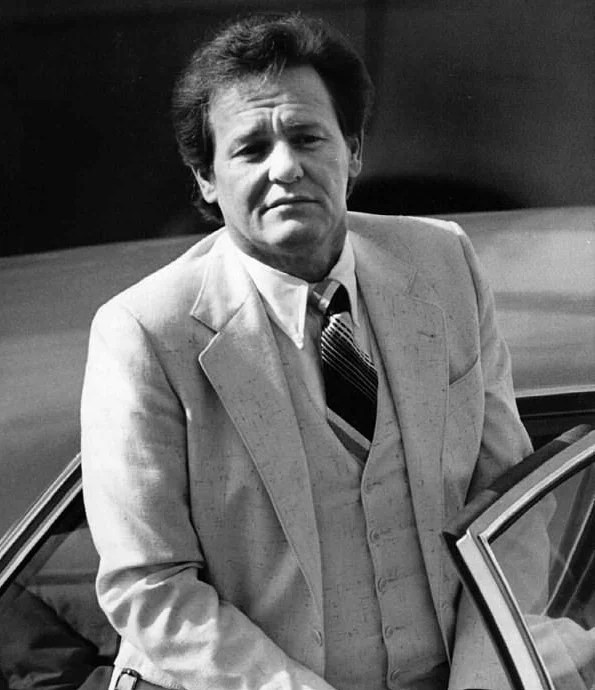 Charley claimed that he had also participated in a far more consequential assassination—one that had shocked the nation.
It was difficult to know what to make of the statement. Was it a confession? A drug-fueled delusion? The boast of a man who enjoyed making himself appear more dangerous and important than he was? Or simply an attempt to keep the police talking rather than shooting?
Charley later suggested that his words during the standoff demonstrated how disturbed his thinking had been. He said that claiming responsibility for both killings had been an effort to prolong his life. No credible evidence ever established that he had participated in that other assassination, and authorities discounted the claim.
But once spoken, words like those do not disappear.
The claim followed Charley through the rest of his life. It became part of the mythology surrounding him, repeated in books, television programs and conspiracy theories. Photographs were examined. Faces were compared. People searched for proof that Charley had been present during one of the worst crimes in American history.
The evidence never arrived, but his conviction did.
Two years after his arrest, a jury found Charley guilty of conspiracy, murder and obstruction of justice in the assassination of the federal judge. He received two life sentences. He would spend the remainder of his life in prison, eventually dying in a maximum-security federal facility after more than a quarter century in custody.
 By then, Charley’s son, Tracy, had built a life that could hardly have looked more different from his father’s.
As a teenager, he was deeply involved in his faith. At one point, he considered becoming a minister. He attended a small Presbyterian college, where his interests gradually moved toward English and theater.
Acting gave him something Charley never had: a safe place to become someone else.
Tracy moved to New York and began pursuing work on the stage. Before long, he was cast in a television comedy. He joined an already successful ensemble and played an innocent, good-natured young man whose simplicity was often the source of laughter.
The role made him famous. It also might have allowed him to spend the rest of his career playing lovable and harmless characters. Instead, Tracy repeatedly chose roles that explored violence, crime, power and moral confusion.
He played killers. He played lawmen. He played men who were charming on the surface and dangerous underneath. He played men attempting to escape their histories and others who seemed trapped by them.
Perhaps none of that had anything to do with Charley, but it is difficult not to wonder.
As Tracy’s success grew, he did not entirely abandon his father. He visited Charley in prison and spent substantial amounts of money trying to help him receive another trial. Tracy did not excuse the man’s absence from his childhood, but he still found something in Charley worth knowing.
He once described his father as articulate, well-read and charming. He also acknowledged that he could relate to him more easily as a friend than as a father.
 That may have been the only kind of relationship Charley knew how to give him.
Then, many years into Tracy’s acting career, he accepted a role carrying an almost unbelievable connection to his father’s past.
The film told the story of a powerful man who often felt ignored, humiliated and overshadowed by a younger, more charismatic leader. The two men were political partners, but they were not close friends. They came from different worlds, possessed different temperaments and represented different visions of leadership.
Then came a trip on a fateful Friday—a day that would end the younger man’s life and transform the older man’s.
For the film, Tracy was transformed into the man who inherited the presidency that day. Prosthetics altered his face. Makeup changed his age and appearance. His posture, speech and mannerisms were reshaped until the actor seemed to disappear inside his prominent character.
 The son of a convicted assassin was portraying the man who became president because of an assassination.
And it was not just any assassination.
Tracy was recreating the aftermath of the same presidential murder Charley had once claimed to have helped commit.
The connection was almost too strange to be believable. Charley had spent decades beneath the shadow of an unproven claim that tied him to that terrible day. Now his son was standing inside a dramatic recreation of it, portraying the man whose life changed the moment the shots were fired.
The federal official murdered outside his home was Judge John H. Wood Jr.
The other assassination for which Charley claimed responsibility was that of President John F. Kennedy.
And Charley’s full name was Charles Voyde Harrelson.
Charley’s son, Tracy, played the man who succeeded Kennedy—Lyndon Baines Johnson—in LBJ, directed by Rob Reiner.
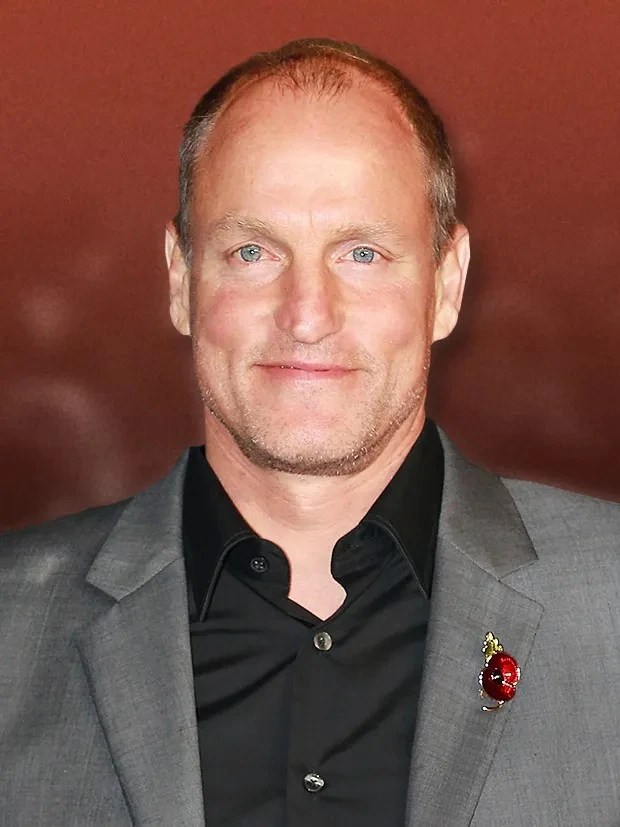 And if you have not guessed by now, Tracy’s full name was Woodrow Tracy Harrelson.
You know him better as Woody.
Woody Harrelson was born on July 23, 1961—Charles Harrelson’s 23rd birthday.
Father and son shared a birthday, a last name and a strange connection to one of the defining tragedies of the 20th century: one through an unproven confession and the other through the role he played.
And now you know the story between the lines.
Enjoyed this? Subscribe and get future reflections, bourbon notes, and assorted nonsense delivered straight to your inbox.
Copyright © 2026 Doug DeBolt.
