
The house was large enough for a boy to disappear inside it.
 There were plenty of rooms, plenty of toys and few of the material limitations that shaped most childhoods. His father held an important position with one of America’s largest automobile companies. His mother moved comfortably through a world of fashion, society and privilege. On paper, the younger son had been born into abundance.
Even the family looked large when its members were listed together, but families written on paper do not always fill the chairs around a child. His brothers were much older and had lives beyond his reach. His parents loved him, but they had responsibilities, interests and schedules of their own. For a time, the family lived in an enormous house with more than forty rooms. Sometimes abundance only provides more places to be alone.
 The boy was shy, uncomfortable around other children and heavier than he wanted to be. He did not naturally command the attention of a room, so when the world around him felt strangely empty, he discovered that he could fill it himself.
He arranged toy soldiers across the floor and gave them lives. One became a commander. Another became a frightened young recruit. Some were brave. Others were foolish. They argued, boasted, complained and pleaded. Battles required heroes and cowards, kings and commoners, winners and losers, and the young storyteller supplied every voice.
Soon the room contained more than armies. It held arguments, personalities and entire histories. When one character grew tiresome, another appeared. Whenever the world became too quiet, the boy made it speak.
 Imagination became a refuge, but it did not remain hidden forever. His mother loved humor, and he learned that a face, an accent or a perfectly timed remark could make her laugh. For a child who sometimes felt overlooked, laughter became proof that another person had noticed him. The voices that kept him company could also create connection.
Those who knew only the man he later became might imagine that he had always been a relentless class clown, disrupting lessons and commanding every gathering. In reality, the student remained shy through much of his youth. His gift emerged gradually, especially after he discovered drama.
Onstage, the rules changed. He did not have to enter a room as himself and hope that people accepted him. A character had already been invited. The voices, gestures and personalities he had practiced alone could now inhabit kings, servants, fools and ordinary men. Becoming someone else began to show him how to become himself.
 He first entered college with more practical ambitions, but acting pulled him elsewhere. That path eventually carried the young man from the Midwest to New York and into one of the country’s most prestigious performing-arts schools.
There he formed an unlikely friendship with another serious young actor. Their personalities, appearances and approaches were different, but the bond endured. The two students promised that whichever one succeeded first would help the other, though neither could have known how differently that promise would one day be fulfilled.
 Their instructors demanded discipline. The students studied movement, dialect, Shakespeare and the careful construction of character. Later, audiences would sometimes assume that the young comedian’s brilliance was little more than inspired chaos, as though someone merely wound him up and watched personalities spill from his mouth. But beneath the speed was serious training. He learned the rules before discovering how far he could bend them.
His first major success came through a supporting appearance that was expected to be little more than an entertaining novelty. Instead, the young performer overwhelmed the boundaries of the role. The character returned, the opportunity expanded and the voices that once filled an empty room began reaching homes across the country.
 Audiences had never seen anything quite like him. Characters seemed to burst from him fully formed. One accent chased another across the stage. A politician interrupted a preacher, who became a frightened child, who disappeared into an elderly woman before the audience had caught up with the first joke. His body accelerated with his mind, as though one man were trying to contain an entire cast and repeatedly failing.
He did not simply tell jokes. He became them.
Fame arrived quickly, and with it came temptations that moved nearly as fast as the performer did. The comedy world of the late 1970s and early 1980s was filled with late nights, alcohol and cocaine. Substances could extend the energy, quiet the insecurity or postpone the silence that waited when the performance ended.
 For a time, he followed that road. Then a close friend died from an overdose, and the birth of his first child gave him another reason to reconsider the direction of his life. The new father stepped away from drugs and alcohol, understanding that the life he had built could disappear as rapidly as one of his improvised characters.
Sobriety did not remove every struggle. Years later, he would relapse and seek help again. But those battles should not obscure what he gave during the years between them.
The comedian became one of the most successful entertainers in the world, yet some of his finest work depended upon stillness. He portrayed men who challenged convention, cared for the wounded, searched for redemption and helped others confront pain they had carried for years. The performer known for becoming everyone learned that sometimes the most powerful thing he could do was remain one person and tell the truth.
 He also used laughter beyond the stage and screen. He performed for military personnel far from home, helped raise money for people experiencing homelessness, visited hospitals and supported fellow performers. He spoke honestly with younger actors about addiction and emotional pain. The laughter was not always a disguise. Sometimes it was an offering.
Years after the two acting students had promised to help one another, his old friend suffered a catastrophic accident. The man who had once portrayed a seemingly invincible hero now lay paralyzed in a hospital bed, facing surgery, uncertainty and the possibility that the life he had known was over.
Then a strange doctor entered the room. Speaking in an exaggerated Russian accent, the visitor announced that he had arrived to perform an outrageous medical examination. For a moment, the patient did not recognize his old friend. Then he laughed—the first time he had laughed since the accident.
 The actor who had spent years portraying a man capable of rescuing others had been given a reason to remain in the fight by the childhood voice-maker who had once learned to fill an empty room.
That moment captured something essential about the comedian’s gift. The voices born from loneliness had become a way of reaching people in places where ordinary words were not enough.
People are often tempted to reduce a complicated life to a simple lesson. When a comedian suffers, the world reaches quickly for the image of the sad clown—the man who made everyone else laugh while concealing unbearable darkness. There was darkness in this life. There was addiction, depression, fear and loneliness. Some who worked beside him sensed sadness beneath the speed and brilliance. Others knew about his struggles because he spoke openly with them.
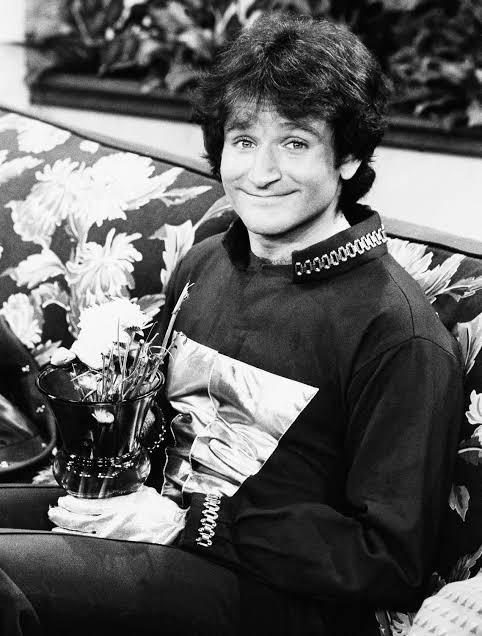 But the final chapter was not merely the inevitable conclusion of a secretly miserable man. Something was happening inside his brain.
The once-restless performer began experiencing anxiety he could not explain. Sleep became difficult. His body stiffened. His memory faltered. Tasks that once required little effort became confusing. Paranoia entered his thinking, and the mind that had moved with astonishing freedom began turning against him.
Those closest to him knew something was terribly wrong. What they could not know was that the anxiety, confusion, sleeplessness, physical changes and fear were not separate crises. They were parts of the same disease, advancing without a name.
Doctors diagnosed Parkinson’s disease, but that diagnosis did not explain the full terror of what he was experiencing. The complete answer came only after his death, when an examination revealed widespread Lewy body disease, a devastating neurological condition capable of affecting thought, movement, perception, sleep and emotion.
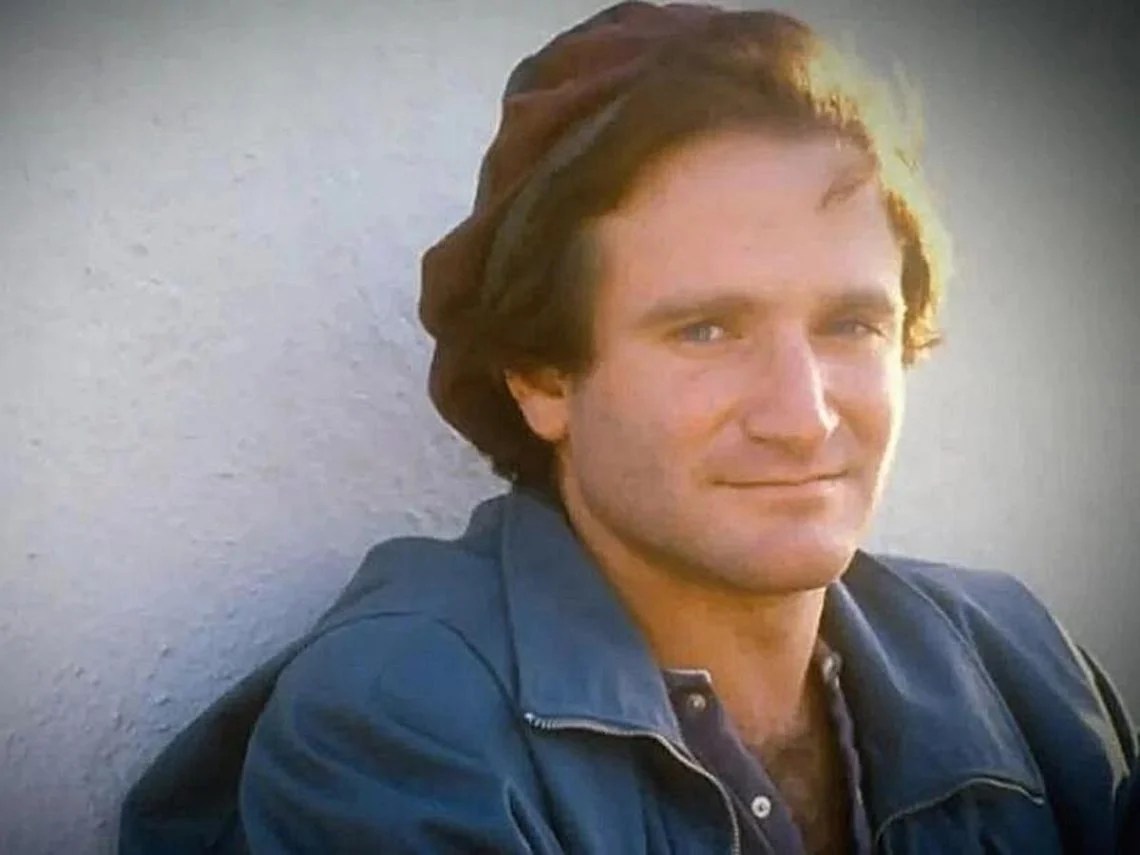 The man and those closest to him had been fighting an enemy they could not see and did not understand. The child who had once created an entire world inside his mind was losing his ability to move safely through it.
On August 11, 2014, overwhelmed by an illness no one had yet fully identified, he died by suicide. He was sixty-three years old.
By then, the voices that began among toy soldiers had traveled around the world. They had made children laugh, encouraged adults to think and brought moments of relief to people sitting in theaters, hospital rooms and military bases.
The large house of his childhood had once left him feeling small and alone, so the boy filled the silence. For the rest of his life, the man who became everyone used those voices to fill silences for the rest of us.
 His name was Robin Williams.
You probably watched him become a hundred different people, sometimes in the space of a single minute. What you may not have known was that the voices began long before the stages, the cameras and the applause. They began with a lonely boy in a very large house, teaching the silence how to speak.
And now you know the story between the lines.
Enjoyed this? Subscribe and get future reflections, bourbon notes, and assorted nonsense delivered straight to your inbox.
Copyright © 2026 Doug DeBolt.
