
Read
Jesus said to him, “I am the way, and the truth, and the life. No one comes to the Father except through me.
John 14:6
Reflect
Have you ever watched someone cling to a claim even after the evidence against it became overwhelming? Once a story becomes part of a person’s identity, abandoning it can feel harder than ignoring the truth.
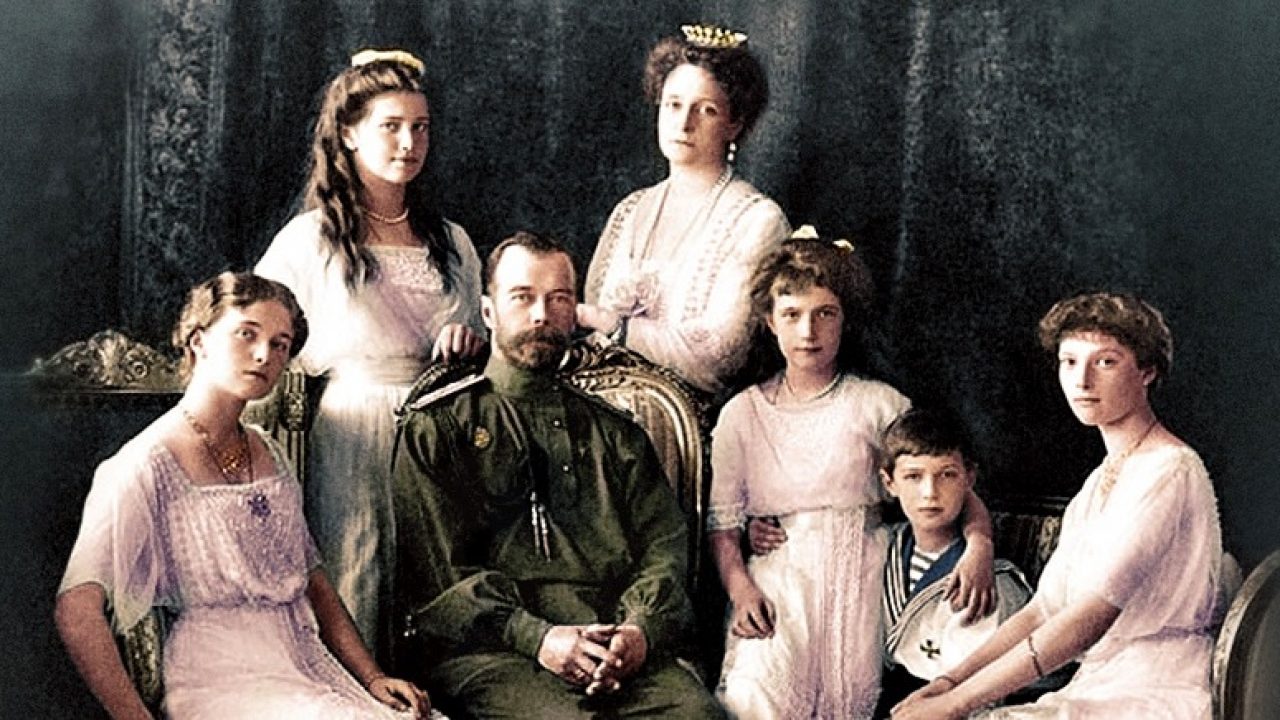
On this date in 1918, the royal family of Russia was executed by Bolshevik revolutionaries in the basement of a house in Yekaterinburg. The scene was particularly gruesome—more butchery than execution—and it is difficult to imagine that anyone other than the executioners walked out of that basement alive.
But from that reality sprang a myth.
The Bolsheviks concealed what had happened, and the bodies remained undiscovered for decades. Because the truth was hidden, rumors spread that one or more of the royal children had somehow survived and been smuggled out of Russia.
It was a fantastic tale that fueled countless imaginations and inspired numerous stories. Movies about Anastasia were released in 1956 and 1997, each offering a fairy-tale version of the legend. A 1986 television movie dealt more directly with the woman whose claim helped keep the story alive.
She eventually became known as Anna Anderson, and she claimed to be Grand Duchess Anastasia, the youngest daughter of Tsar Nicholas II.
Many members of the Romanov family and others who had known Anastasia rejected Anderson’s claim. They pointed to differences in her appearance, her language and her memories. Her account of escaping the execution was also vague and difficult to verify.
Still, others chose to believe her.
At various times, wealthy supporters provided Anderson with housing and financial assistance. Composer Sergei Rachmaninoff even helped arrange lodging for her. Some people were so convinced by her story that they continued supporting her claim despite the objections of those who had actually known Anastasia.
Anderson never relented. She continued insisting that she was Anastasia until she died in Virginia in 1984 at the age of 87.
After her death, DNA testing revealed that Anderson was not related to the Romanovs. Her genetic profile instead matched the family of Franziska Schanzkowska, a Polish factory worker who had disappeared years earlier. Later, the discovery and testing of the final two Romanov remains confirmed that none of the royal children had survived.
Whether Anderson knowingly invented the story or eventually came to believe it herself, she built much of her life around an identity that was not true. And she persuaded many others to accept it.
Every day, we are presented with opportunities to believe either the truth or a lie. But faith is not the decision to accept something simply because we want it to be true. Biblical faith is trusting the One who has revealed Himself to be true.
In John 14, Jesus was comforting His troubled disciples. Thomas asked how they could know the way, and Jesus did not merely give him directions or a list of religious requirements. He said, “I am the way.”
Christianity is not built merely upon accepting a set of ideas. It is built upon trusting a Person.
The world offers countless explanations about God, truth and what happens after death. Some suggest that all paths eventually reach the same destination. Others say that sincerity matters more than what we believe. But Jesus did not present Himself as one possible path among many.
He said that He is the way, the truth and the life, and that no one comes to the Father except through Him.
That is an exclusive claim, but it is also an invitation. Salvation is not something we earn by finding the right formula or living a flawless life. It is received through faith in Jesus Christ. A life shaped by His ways follows from that faith; it does not purchase it.
If you have not yet trusted Him, let today be the day that you begin.
If you already know Him, remember that the world is watching Christians to see whether Jesus truly makes a difference. Our lives do not make Jesus true. He is true regardless of how faithfully we represent Him. But our words, our kindness and our integrity can either make His truth easier for others to see or give them another reason to look away.
Let everything we do point clearly to the One who is the way, the truth and the life.
Enjoyed this? Subscribe and get future reflections, bourbon notes, and assorted nonsense delivered straight to your inbox.
Reflection copyright © 2026 Doug DeBolt.
Scripture quotations are from The Holy Bible, English Standard Version® (ESV®), copyright © 2001 by Crossway, a publishing ministry of Good News Publishers. Used by permission. All rights reserved.

I genuinely enjoy your posts and found the part about the Romanov family very interesting. Did you know Tsar Nicholas II was related to the King of England?
The part that always gives me pause is the religious section. I’m not saying it shouldn’t be there, but I do think it is framed in a more devotional way. Almost to the point of presenting belief as established fact, with the implication that people who don’t share that belief are simply wrong.
I would point out that, although most historians and scholars agree that Jesus did exist, there is no contemporary evidence of his own writings, teachings, or claims. Specifically, statements such as the only way to God is through Him, or that Christianity is the one true path above all other beliefs and religions, ultimately rest on faith rather than historical evidence.
To me, that is the distinction. Faith concerns beliefs that go beyond what can be independently verified. The accounts attributed to Jesus in the New Testament were written approximately 60 to 100 years after his death, so the specific teachings and quotations are based on later testimony rather than contemporary records.
I think the piece might be stronger if the transition made that distinction more clearly. The historical discussion stands on evidence, while the final section reflects your personal faith and beliefs. Presenting it that way acknowledges that it is a matter of faith rather than something that can be established as historical fact.
Of course, it is your blog, and I don’t share the same faith in Christ. I tend to rely on factual and historical evidence when forming my views. That is simply my perspective, just as the section on faith and Christ reflects yours.
Thank you. And yes, Nicholas II and King George V were first cousins—their mothers were sisters—and their resemblance was remarkable.
I understand the distinction you are making between what can be demonstrated scientifically and what ultimately requires faith. DNA can establish that Anna Anderson was not Anastasia in a way that historical study cannot scientifically prove the divine identity of Jesus or the eternal truth of John 14:6.
I would make two clarifications, though.
First, the New Testament writings were not all produced 60 to 100 years after Jesus’ death. Paul’s earliest letters were written within roughly 20 to 30 years and contain teachings and traditions that were already being shared among Christians. The Gospels were written later, but they did not suddenly emerge without earlier testimony behind them.
Second, I do not think the absence of writings personally penned by Jesus means there is no historical evidence for His teachings. Much of what we know about the ancient world was preserved orally before being written. Confucius and the Buddha left no writings of their own, and the teachings associated with them were recorded much later. Historians do not therefore dismiss everything attributed to them. They examine how the material was transmitted, how early the traditions appear, whether multiple sources support them and whether they fit the historical setting. The New Testament deserves the same serious examination.
I agree that history alone cannot compel someone to accept Jesus as divine. That conclusion involves faith. But there is an important difference between faith that goes beyond what can be scientifically verified and faith that exists without evidence. Christian faith is rooted in historical testimony about a real person, His disciples, His teachings, His death and the experiences that convinced His followers He had risen.
You are also right that the conclusion of the post is devotional rather than religiously neutral. That is intentional. These reflections begin with Scripture and are written from my Christian faith. When I write that Jesus is the way, the truth and the life, I am not merely describing what Christians happen to believe. I am affirming what I believe to be true, while recognizing that someone who does not share my faith will reach a different conclusion.
I appreciate that you continue reading despite that disagreement, and especially that you express your perspective thoughtfully.