


The WordPress question asks what book I think deserves a sequel.
My first instinct is to say none of the great ones.
That may sound like a dodge, but I mean it sincerely. Some books are complete. They do what they came to do. They leave the reader changed, wounded, amused, convicted or comforted, and then they have the good manners to stop talking. Not every story needs a cinematic universe. Not every beloved character needs a prequel, sequel, spinoff, origin story, streaming series and collectible popcorn bucket.
Some stories are better because they end.
That is especially true of To Kill a Mockingbird.
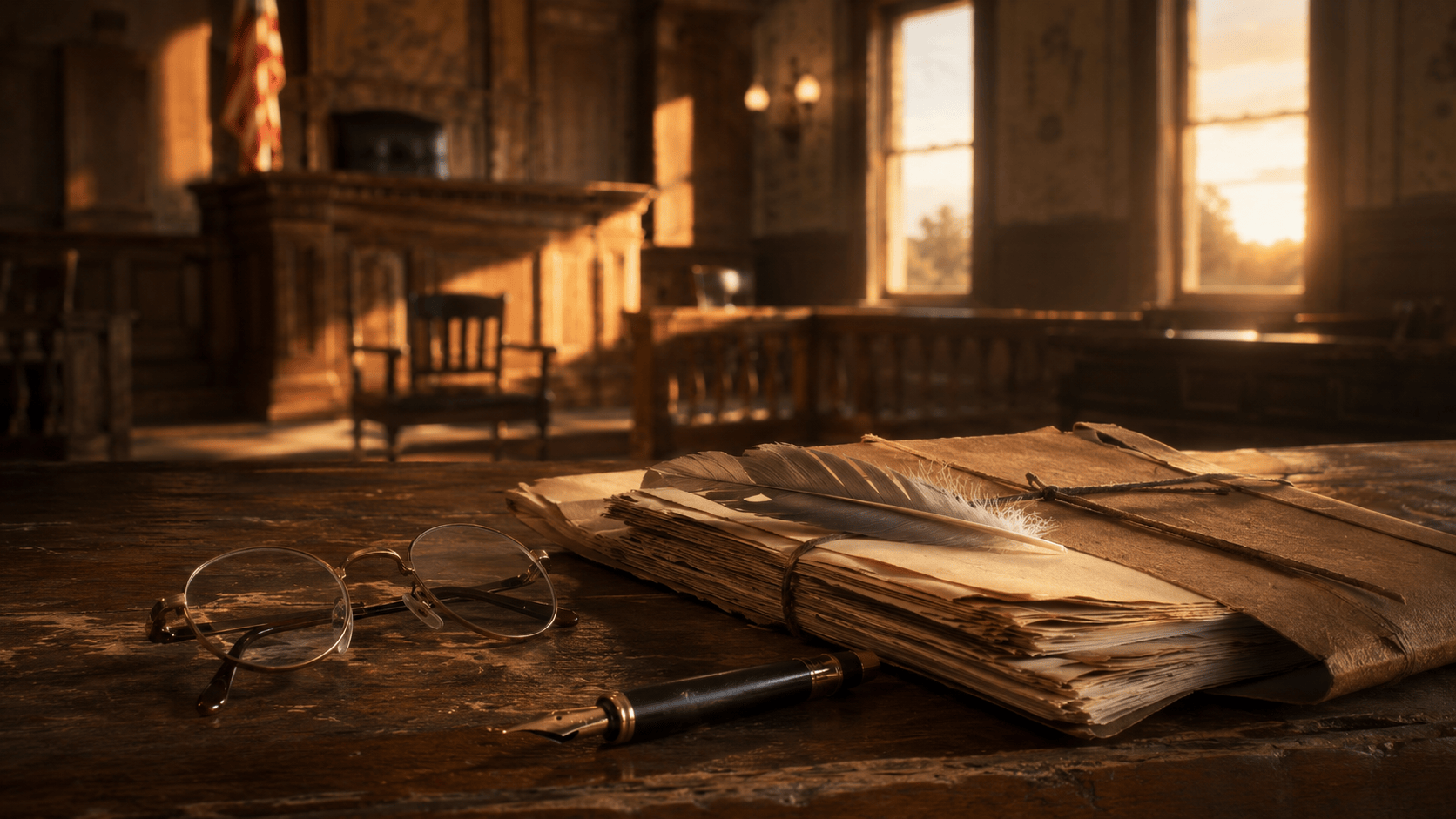 Harper Lee’s novel does not need a sequel because it is unfinished. It is not unfinished. It is about as close to perfect as American fiction gets. Scout tells the story of one season in Maycomb, Alabama, after time has given her enough distance to understand what she saw but not so much distance that she has forgotten what it felt like. That is part of the magic. The book is not just about Atticus Finch, Tom Robinson, Boo Radley, Jem, Dill, Maycomb or the trial. It is about memory itself. It is about the way childhood stores facts long before it knows what they mean.
That is why the voice matters so much.
Scout is not simply narrating events. She is looking back. She is remembering. She is sorting through an old box of people, places, smells, fears, rumors and porch-light shadows. She is old enough to understand the cruelty of Maycomb, but still close enough to the child she was to remember the wonder of it. She can make us laugh at schoolroom nonsense, neighborhood superstition and Dill’s dramatic imagination, then turn the page and show us the ugliness that had been hiding in plain sight all along.
That is not easy to do.
It is also why Go Set a Watchman was such a disaster.
I know there are people who defend it. I am not one of them. I have a copy. I listened to it on Audible. I finished it, but only because I felt some strange literary obligation to do so, like a man trapped in a courtroom until the final witness finally stops talking.
It was excruciating.
The biggest problem is not simply that Go Set a Watchman gives us an older Atticus Finch with racial views that are, at best, deeply troubling. The bigger problem is that it asks us to treat an early version of a story as though it were the rightful continuation of the finished masterpiece. It was not. It was the initial manuscript that eventually became To Kill a Mockingbird. It was the scaffolding before the cathedral. It was the lump of clay before the sculptor found the face.
Publishing it as a sequel did more than disappoint readers.
It damaged Atticus.
And I do not think Atticus Finch needed to be damaged.
That does not mean he needed to be perfect. He was never perfect. A good reader does not need Atticus to be a marble statue standing in the town square with pigeons politely avoiding him. He is a widowed father. He is a small-town lawyer. He is a man of his region, his generation and his limitations. But in the story that made him matter, he did the thing heroes do. He stood where he was supposed to stand when standing there cost him something.
That is why readers loved him.
That is why teachers keep teaching him.
That is why students, even when they roll their eyes at old books and black-and-white movies and anything assigned by an English teacher with too many coffee mugs, still tend to understand him.
Atticus Finch stood between hatred and the vulnerable. He stood between the mob and the jailhouse door. He stood between Tom Robinson and a town that had already made up its mind. He stood before a jury that was almost certainly going to disappoint him, and he made the argument anyway.
That matters.
Maybe it matters even more because he lost.
There are victories that look like defeats because the scoreboard is too small to measure what actually happened. Atticus lost the case, but he did not lose himself. He did not lose his children’s respect. He did not lose the moral shape of the story. He showed Scout and Jem what courage looked like when courage did not come with applause, reward or success.
That is the Atticus Finch we need.
And that is the Atticus Finch Go Set a Watchman made harder to keep.
So, if I have to answer the question, I would say To Kill a Mockingbird deserves a sequel — not because the original needs one, but because the Atticus Finch legacy needs rescuing.
But it would have to be done carefully.
Actually, carefully is not a strong enough word. It would have to be done with reverence, humility, restraint and maybe a warning label from every English teacher in America.
First, the story would have to return to Scout.
Not Jean Louise in some detached, modern, third-person literary autopsy. Scout. Older Scout. Wiser Scout. Scout looking back again after enough years have passed for pain to settle into perspective.
That is essential.
The sequel could not simply tell us what happened next. It would have to be remembered. It would have to be filtered through the same strange, beautiful process that made To Kill a Mockingbird work in the first place. The adult Scout would need to look back on another episode in her life — perhaps one from young adulthood, perhaps one from Atticus’s later years — and tell it with the same mixture of humor, affection, embarrassment, sorrow and moral clarity.
Because Scout can handle complexity without becoming cynical.
That is the key.
A lesser sequel would try to “update” Atticus by making him either spotless or monstrous. Both would be false. A real sequel would understand that childhood heroes become more complicated when we grow up, but that complication does not always mean corruption. Sometimes growing up teaches us that our heroes were more human than we realized. Sometimes growing older teaches us that their humanity makes their courage more impressive, not less.
That is the story I would want.
I would want Scout looking back and saying, in one way or another, that she once thought her father was simple because goodness looked simple from a child’s distance. Later, she learned he was not simple at all. He carried burdens she did not see. He fought battles she did not understand. He made compromises that troubled her and choices that confused her. But when the moment came that defined him, he did not hide.
He stood.
That would be the heart of it.
Not another trial, necessarily. Not another Tom Robinson. Not a recycled plot with new names and old furniture. Maycomb does not need to become a franchise. Boo Radley does not need a crime-solving podcast. Dill does not need to return as a quirky private investigator, though now that I have typed that sentence, I admit I would watch at least one episode.
The sequel would need one central question:
Was Atticus Finch truly good, or did Scout only remember him that way?
And the answer should be yes.
He was truly good.
Not flawless. Not untouched by his time. Not immune to blind spots. Not free from all the sins and assumptions that surrounded him. But good in the way that matters most. Good when goodness became costly. Good when the room turned against him. Good when his children were watching. Good when a frightened man needed someone to stand beside him.
That is what Go Set a Watchman failed to protect.
It did not merely complicate Atticus. It left readers feeling as if someone had taken a hammer to a stained-glass window and then called the broken pieces a more honest portrait. But not every shattered thing is more truthful because it is shattered. Sometimes a broken window is just a broken window.
I do not need Atticus Finch to be easy, sanitized or protected from all hard questions.
However, I do need the story to remember what made him heroic in the first place. If a sequel exists, it should not erase the man on the courthouse floor, the man outside the jail, the man who told Scout that real courage is knowing you are licked before you begin but beginning anyway and seeing it through.
That man matters.
Maybe that is why this question is harder than it first appears. A sequel to a beloved book is dangerous because it can change the memory of the original. Once a door is reopened, the room is not always the same when we walk back in. Sometimes the sequel gives us more of what we loved. Sometimes it explains too much. Sometimes it reveals that the magic was not meant to survive a second visit.
To Kill a Mockingbird should have been left alone.
But since it was not, I would welcome an honest attempt to put the furniture back where it belongs.
Let Scout tell it.
Let her be older, but still Scout. Let her look back on a moment when she had to see her father clearly, not as a child sees him and not as a cynic would reduce him, but as a grown woman who has lived long enough to know that love and truth are not enemies.
Let her admit that Atticus was human. Then let her remind us that human beings can still be brave.
That is the sequel I would want. Not because To Kill a Mockingbird failed to finish the story. It finished beautifully. Maybe too beautifully to touch.
But Go Set a Watchman touched it anyway.
So if there has to be one more word from Maycomb, let it come from Scout. Let it come with memory, grace and perspective. Let it restore what never should have been taken.
Atticus Finch does not need to be perfect.
But he does need to be Atticus.
Enjoyed this? Subscribe and get future reflections, bourbon notes, and assorted nonsense delivered straight to your inbox.
Copyright © 2026 Doug DeBolt.

A great book. Read it twice.