
 I’ve been doing blind tastings long enough to know that expectations can be dangerous things. Sometimes a bottle comes with so much hype that it couldn’t possibly live up to its reputation. Other times, a whiskey carries a price tag that creates expectations no reasonable bourbon could satisfy. And sometimes, a whiskey simply doesn’t deliver what you hoped it would.
I had three bottles on my shelf that fit those descriptions. None was a bad bourbon, but all three had left me disappointed for one reason or another. And I started wondering whether those disappointments were entirely justified. So I decided to give them a second chance.
The contestants were Weller Antique 107, Penelope Marshmallow Toast, and Chestnut 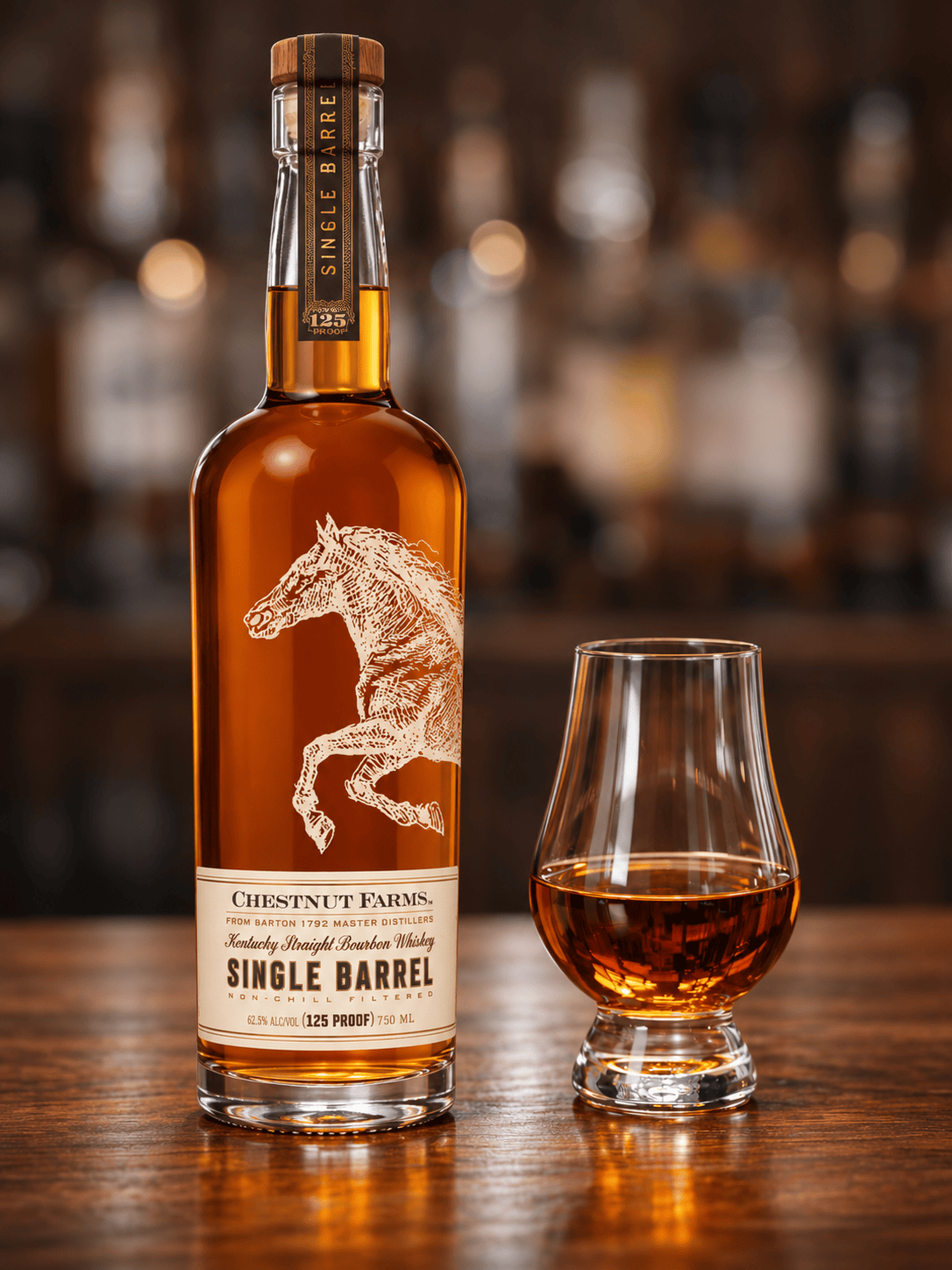 Farms Single Barrel. All three had scored reasonably well in their original tastings, but none had quite delivered what I’d expected. Weller had the burden of its reputation. Penelope had a name that promised a dessert-like experience I hadn’t quite found in the glass. And Chestnut Farms had the unfortunate distinction of carrying a $150 price tag at Total Wine.
That last one was particularly troublesome. I’d originally scored Chestnut Farms at 83.76, a perfectly respectable number, but hardly the kind of score that makes you feel good about spending $150 on a bottle of bourbon. It was time to find out whether the whiskey was really the problem.
Three Bottles, Three Second Chances
 I poured the three bourbons into numbered sample bottles, recording their identities before mixing them up. The goal was simple: evaluate each whiskey without knowing what I was drinking and without allowing reputation, price, or previous disappointment to influence the results.
There was one modification to my usual process. Because my sense of smell hasn’t been entirely cooperative lately, I decided to retain the original nose evaluations rather than conduct fresh ones. The palate, mouthfeel, and finish would all receive new evaluations, and I wouldn’t restore the original nose scores until after the blind tasting.
That meant this wasn’t a completely fresh evaluation, but it allowed me to concentrate on the aspects of the whiskey I could judge more reliably. And with the bottles shuffled, I went to work.
Sample A: A Respectable Second Effort
Color: Mid-copper
Nose: The nose leans slightly savory while still carrying butter, mild baking spice, caramel, and vanilla.
Palate: The palate leads with sweet fruit and brown sugar. There’s some tartness from the oak, along with traditional notes of caramel and vanilla and a touch of cinnamon. A waft of ethanol also makes an appearance.
Mouthfeel: Silky.
Finish: Oak moves to the front, with vanilla and cinnamon rounding out the experience.
Final Score: 81.97
This was a perfectly enjoyable bourbon, but there wasn’t anything that made me particularly excited about it. The sweetness was pleasant, the mouthfeel was silky, and the finish offered enough character to keep things interesting. But the oak asserted itself a little more than I’d have preferred, and the overall experience wasn’t especially memorable.
My initial suspicion was that Sample A might be Weller Antique 107. It seemed to fit the general profile I’d remembered, although I wasn’t particularly confident about the identification. As it turned out, I was right.
Weller had originally scored 80.29, so the new 81.97 represented an improvement of 1.68 points. That’s a respectable gain, but it still left Weller in third place among the three competitors. For a bourbon with Weller’s reputation, that’s not exactly a ringing endorsement.
Sample B: A Pleasant Surprise
Color: Solid copper
Nose: The nose carries a slight floral note before leaning toward the savory side, with baking spice, oak, caramel, and a touch of ethanol.
Palate: Warm brown sugar leads the way, followed by toasted nuts and lightly toasted oak. Sweet caramel and vanilla join the party, along with a modest helping of baking spice.
Mouthfeel: Lightly creamy.
Finish: Buttery caramel and light oak.
Final Score: 83.22
Sample B was a step up from A. The palate was more balanced, with the brown sugar, toasted nuts, caramel, and vanilla creating a satisfying combination of traditional bourbon flavors. The lightly creamy mouthfeel was pleasant, and the finish brought everything together without overstaying its welcome. There wasn’t a tremendous amount of complexity, but the whiskey delivered a solid, enjoyable experience.
I thought this might be Chestnut Farms. The flavor profile seemed consistent with what I remembered, and I was starting to believe that I’d correctly identified two of the three samples. Not so fast. Sample B turned out to be Penelope Marshmallow Toast, which had originally scored 82.30. Its new score of 83.22 represented a gain of 0.92 points.
That’s a nice improvement, and I certainly enjoyed the whiskey more this time. But I still find the name a little misleading. When I see “Marshmallow Toast,” I’m expecting a rich, dessert-like experience. Instead, I found a nicely balanced bourbon that leaned into brown sugar, toasted nuts, and traditional caramel and vanilla flavors. There’s nothing wrong with that. In fact, it’s quite enjoyable. It just isn’t quite what the name makes me anticipate.
Sample C: Now We’re Talking
Color: Solid copper
Nose: Inviting, with butterscotch, nutmeg, sweet red fruit, light oak, and just a touch of sugar.
Palate: Sweet and substantial, with brown sugar syrup, cinnamon, caramel, and touches of oak. There’s also a solid wave of ethanol, but it doesn’t overwhelm the other flavors.
Mouthfeel: Thick and rich — easily the best of the three.
Finish: Substantial and satisfying, with sweet cinnamon syrup backed by brown sugar and caramel.
Final Score: 85.23
Now this was a bourbon I could get excited about. The palate was rich and substantial, with a syrupy sweetness that worked beautifully alongside the cinnamon, caramel, and oak. There was a noticeable ethanol presence, but it didn’t interfere with the overall experience.
And the mouthfeel was outstanding. I love a bourbon that has some weight to it, and Sample C delivered. It was thick, rich, and satisfying, creating the kind of experience that makes you want to slow down and appreciate what’s happening in the glass.
But the finish was what really separated it from the other two. Where A and B offered pleasant finishes, C kept delivering. The cinnamon syrup, brown sugar, and caramel lingered in a way that made the entire experience more satisfying. The palate and complexity were slightly better than the other samples, but the finish was the decisive factor.
There was just one problem. I had absolutely no idea what I was drinking.
I’d initially guessed that A was Weller and B was Chestnut Farms, which would have made C the Penelope. But this didn’t behave anything like the Marshmallow Toast I’d remembered. The richness, the texture, and especially that substantial finish were all better than I’d expected from Penelope. I was thoroughly confused, and that was exactly the point of the exercise.
The Reveal
Before checking the bottles, I went back and retasted all three samples. I’d noticed that each bourbon seemed to get better as I moved through the lineup, and I wanted to make sure I wasn’t simply favoring the last one I’d tasted. The impressions held. Sample A remained third. Sample B was clearly better. And Sample C was the unquestioned winner, largely because of its outstanding mouthfeel and finish.
Then I turned over the bottles to check their numbers. Sample A was Weller Antique 107, and Sample B was Penelope Marshmallow Toast. And Sample C? Chestnut Farms Single Barrel.
Well, I’ll be damned.
The bourbon I’d been most disappointed with because of its $150 price tag had just delivered the best tasting experience of the evening. And I hadn’t even recognized it. That was quite a revelation.
The Numbers Tell an Interesting Story
Here’s how the three bourbons performed compared with their original evaluations:
| Bourbon | Original | New Score | Improvement |
|---|---|---|---|
| Weller Antique 107 | 80.29 | 81.97 | +1.68 |
| Penelope Marshmallow Toast | 82.30 | 83.22 | +0.92 |
| Chestnut Farms Single Barrel | 83.76 | 85.23 | +1.47 |
 What’s interesting is that all three improved by relatively similar margins, averaging about 1.36 points apiece. And they finished in exactly the same order as they had originally. Weller was third. Penelope was second. Chestnut Farms was first.
The blind tasting didn’t turn the original rankings upside down. In fact, it reinforced them. But each whiskey delivered a better experience the second time around.
Why? I can’t say for certain. There could have been differences in tasting conditions, changes in my palate, or any number of other factors. But I suspect removing expectations played a role, particularly with Chestnut Farms.
When I originally tasted it, I knew I was drinking a $150 bourbon. And whether I wanted to admit it or not, that price tag was part of the experience. I wasn’t simply asking whether I liked the whiskey. I was asking whether I liked it $150 worth.
That’s a difficult standard for any bourbon to meet. This time, I didn’t know what was in the glass. I wasn’t thinking about the money I’d spent, the reputation of the bottle, or whether I should have bought something else instead. I was simply tasting bourbon, and Chestnut Farms was delicious.
The Cheapskate Scale Has Its Say
Here’s where things get particularly interesting. While Chestnut Farms was the clear winner on taste, the results were much closer when I plugged the new scores into my Cheapskate scale, which takes price into consideration. In fact, the three bourbons finished in what amounts to a virtual tie.
| Bourbon | Tasting Score | Cheapskate Score |
|---|---|---|
| Weller Antique 107 | 81.97 | 86.66 |
| Penelope Marshmallow Toast | 83.22 | 87.51 |
| Chestnut Farms Single Barrel | 85.23 | 87.23 |
Less than a single point separated all three on the Cheapskate scale, despite their different prices. Penelope actually took first place on value with an 87.51, edging Chestnut Farms by just 0.28 points. Weller finished third at 86.66, only 0.85 points behind Penelope.
Chestnut Farms and Penelope both advanced in my Cheapskate rankings with their improved tasting scores. And while Chestnut Farms remained the best bourbon of the three, Penelope managed to deliver slightly better value for the money.
The numbers also reinforced something I’ve maintained throughout my bourbon adventures: price and quality aren’t necessarily the same thing. A more expensive bourbon may be a better drinking experience without automatically being a better purchase.
But Chestnut Farms had another distinction to celebrate. Its 85.23 puts it solidly into my March Madness rankings, where it’ll compete against some of the very best bourbons on my shelf. And that’s an achievement that has nothing to do with how much the bottle costs.
Still, I can’t ignore the price entirely. I have four different batches of Booker’s, and all four have earned places in my March Madness rankings. Even if I’d purchased those bottles at inflated store prices of at least $120 each, they’d still cost less than the $150 Total Wine charges for Chestnut Farms. That’s some pretty stiff competition.
I’m still not convinced Chestnut Farms is worth $150. In fact, when this bottle is gone, there’s a very real possibility I’ll never buy another one, at least not at that price. But I’m no longer disappointed in the bourbon.
It’s a delicious, deeply satisfying whiskey with an inviting nose, a substantial palate, a wonderfully rich mouthfeel, and a finish that was easily the best of the three. Its new 85.23 score puts it solidly among the better bourbons on my shelf, and I’m looking forward to seeing how it performs when March Madness rolls around.
The price may keep me from buying another bottle, but it won’t keep me from appreciating the one I have. And that’s a distinction I probably should have made the first time.
The Value of a Second Chance
I went into this tasting hoping to give three disappointing bourbons an opportunity to redeem themselves. What I discovered was that all three deserved a little more credit than I’d originally given them.
Weller improved by 1.68 points. Penelope gained 0.92. And Chestnut Farms climbed 1.47 points to an impressive 85.23. The tasting rankings didn’t change, but my appreciation for the whiskeys did. And when price entered the equation, all three landed remarkably close together on my Cheapskate scale.
Perhaps the biggest lesson was that sometimes our expectations can get in the way of enjoying what’s actually in the glass. A famous name doesn’t guarantee a great bourbon. A clever name doesn’t guarantee the flavors it suggests. And a high price doesn’t necessarily mean the whiskey will disappoint — even if it doesn’t deliver enough value to justify buying it again.
Chestnut Farms may never be a bargain, and it may never find its way into my shopping cart again. But it certainly deserves its place in my March Madness competition.
Sometimes a second chance doesn’t change the whiskey. It changes the person drinking it.
Enjoyed this? Subscribe and get future reflections, bourbon notes, and assorted nonsense delivered straight to your inbox.
Copyright © 2026 Doug DeBolt.
