
Sometimes history gets things wrong. The story we’re left with is incorrect or incomplete, so we continue on, believing something that isn’t entirely a lie but certainly isn’t entirely true. Such is the case with this week’s story — one that many of us have heard about but almost none of us accurately understand.
The story you know is probably one or two lines long and has left you with an incorrect perception of what really happened that Saturday long, long ago. The real story is The Story Between the Lines, and it’s what we’ve come here to correct this afternoon.
The story begins with a letter, and that letter presented a problem. A rather expensive problem, in fact.
A small Southern college was already struggling financially. Its leadership had made some difficult decisions about which activities the institution could continue to support, and one of those decisions appeared to have settled the matter. There was no reason to expect any further trouble.
Except that somebody had forgotten about an earlier agreement.
The institution on the other end of that agreement wasn’t particularly interested in excuses. Its representative had made his position perfectly clear: Honor the commitment or pay the penalty.
 And the penalty was substantial. Many of us today could write a check to cover the amount that college owed, but in those days — and in terms of the cash the school had available — the amount was an impossibility. To that school, in fact, it represented a small fortune. This school was already trying to get its finances under control, so the prospect of writing that check was about as appealing as taking out a second mortgage to repair a house scheduled for demolition.
There was, however, another option. The institution could fulfill its obligation, and instead of paying the penalty, it would receive one-sixth that amount in compensation. The other school even offered to cover the travel expenses.
That sounded simple enough. Except that the school had already eliminated the very thing it was contractually obligated to provide.
 Enter a student named George. George suddenly found himself responsible for solving a problem that probably should have been somebody else’s responsibility. The institution’s administrators had decided they could no longer support an established activity, but their decision hadn’t made its existing commitments disappear.
And the man on the other side — a rather aggressive man named John — wasn’t budging.
George needed volunteers. Not particularly talented volunteers, mind you. At this point, qualifications were considerably less important than willingness. He just needed enough people to show up and satisfy the terms of the agreement.
He turned to fraternity brothers, fellow students, and anyone else who might be persuaded to help. Accounts differ on exactly how many ultimately participated, but the number was somewhere around a baker’s dozen.
They weren’t professionals. They weren’t even especially prepared. In fact, most had little reason to believe they could perform anywhere near the level of the people awaiting them.
But there was a contract to fulfill. And a small fortune was a small fortune.
 On the other side of the arrangement was John — a man with considerable influence, an impressive reputation, and a memory that apparently didn’t come equipped with a forgiveness setting.
He had recently suffered a spectacular humiliation at the hands of the smaller institution, and he wasn’t convinced the circumstances had been entirely legitimate.
There were allegations that his opponents had brought in outside talent, giving themselves an advantage that he considered unfair. Whether those accusations were fully justified remains a matter of historical debate, but there’s little question that the experience left a lasting impression.
He was also frustrated by a system that rewarded impressive numerical results without always considering how those results were achieved. To him, there was something fundamentally dishonest about using enormous margins to establish superiority when the quality of the opposition varied so dramatically.
Perhaps John wanted revenge. Perhaps he wanted to make a point about the system. Perhaps both explanations are true. Whatever his motivations, he had the opportunity to make a rather emphatic statement, and he wasn’t inclined to let it pass.
The smaller institution’s financial troubles weren’t his concern. Neither was the fact that it had already abandoned the activity in question. There was an agreement, and he expected it to be honored.
George, meanwhile, had managed to assemble his little band of volunteers. They would make the trip, fulfill the obligation, and return home with their institution’s finances intact.
That was the plan, anyway.
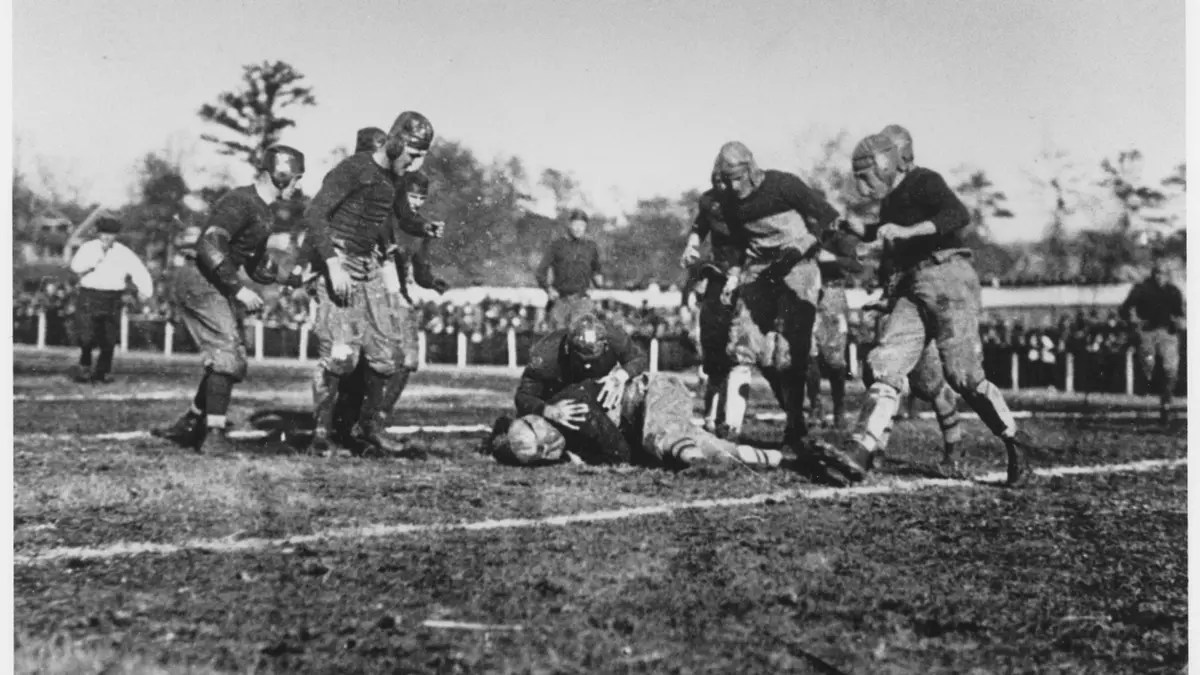 What happened next was a mismatch of almost unimaginable proportions.
The experienced participants on one side were among the best in the country. They had practiced together, understood what they were doing, and operated under the direction of an accomplished leader.
The volunteers on the other side were, well, volunteers.
They had agreed to be there. That was about the extent of their competitive advantage.
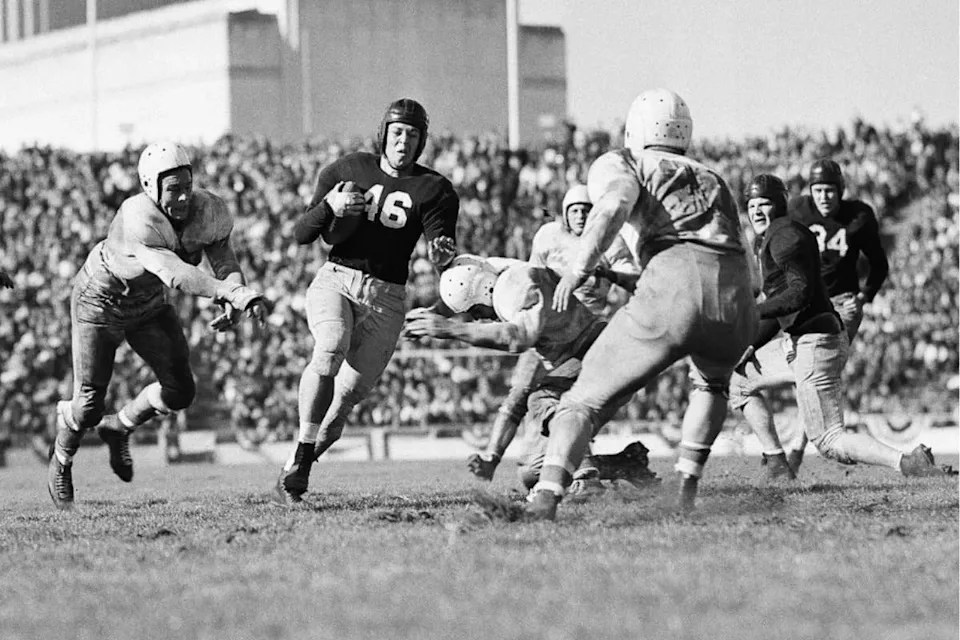 From the opening moments, the difference was obvious. The stronger group took control immediately, and every attempt by the visitors to recover only seemed to make things worse.
Mistakes multiplied. Opportunities disappeared. The situation deteriorated from hopeless to absurd. And still, the ordeal continued.
At one point, one of the unfortunate volunteers reportedly dropped the object everyone was supposed to be handling and shouted to a teammate to retrieve it. The teammate’s response, as George later recalled, was essentially that the fellow who dropped it could pick it up himself.
It was hardly the sort of teamwork that inspires future generations.
By the time the ordeal ended, the visitors had accomplished virtually nothing by conventional standards. Their opponents, meanwhile, had produced a result so extraordinary that it would remain unmatched for more than a century.
But here’s the interesting part.
The visitors hadn’t come expecting to succeed in the traditional sense. They came because failure to appear would have cost their institution money it could scarcely afford. And  when the whole miserable business was over, they had fulfilled their obligation. They had lost just about everything except the one thing they had actually come to protect.
Which brings us to the extraordinary event that took place on October 7, 1916.
Normally at this point, we would leave you with the hidden identity and a simple, “That’s the story between the lines.” But this time, you really need to understand the entire picture.
First, the score. Once you see this, you’ll think you know the story, but there’s so much more beyond the numbers. If you follow college football at all — and even if you don’t — you might have seen this number somewhere.
222–0.
 On that Saturday — October 7, 1916 — the Georgia Tech Yellow Jackets dismantled Cumberland College at Grant Field in Atlanta so thoroughly that no team has — or likely ever will — eclipse the number.
You read the number right. 222–0. Yes, two hundred and twenty-two to nothing.
It remains the most lopsided score in the history of college football, and unless somebody decides to schedule the defending national champions against a team of second-graders, I suspect the record is reasonably secure.
But now that we know the circumstances, the score becomes a little easier to understand.
Cumberland had discontinued its football program before the season. George Allen, the student manager, had been forced to assemble a team from fraternity brothers and other students simply to avoid the $3,000 penalty Georgia Tech coach John Heisman threatened to impose if Cumberland failed to appear. And just in case you’re thinking, “That’s not much money,” in today’s terms, it’s closer to $100,000.
And the name on the other side? Yes, it’s that John Heisman. The man whose name now adorns the most prestigious individual award in college football. And he had a score to settle.
 In the spring of 1915, Cumberland’s baseball team had demolished Georgia Tech by a score of 22–0.
Heisman also coached Georgia Tech’s baseball team, and he believed Cumberland had used professional players masquerading as college students. The allegations have never been conclusively established, but Heisman’s resentment became a central part of the story.
When Cumberland subsequently dropped football, Heisman refused to release the school from its scheduled game.
He offered $500 (a little more than $15,000 today), plus travel expenses, if Cumberland would appear, but warned that failing to fulfill the agreement would result in a $3,000 demand for lost gate receipts.
Allen did the only thing he could think to do. He rounded up enough students to field a team and headed to Atlanta.
The ensuing game was, to put it mildly, a disaster.
Georgia Tech scored on its first offensive play. Cumberland fumbled on its first possession, and Tech scored again. More turnovers followed. More touchdowns followed.
By the end of the first quarter, Georgia Tech led 63–0. By halftime, the score was 126–0.
Now, most coaches with a 126-point halftime lead might reasonably conclude that the contest was safely in hand. Not Heisman. According to one frequently repeated account, he warned his players at halftime that Cumberland might still have some surprises waiting for them.
One can only assume he was concerned that the Bulldogs had secretly recruited Superman and the United States Marine Corps during the intermission.
The second half was shortened, but it hardly mattered. Tech added another 96 points to finish with 222. Cumberland never scored, never managed a first down, and finished with negative rushing yardage. Georgia Tech didn’t attempt a pass all afternoon. It didn’t need to.
And believe it or not, the score could have been even worse. Georgia Tech scored 32 touchdowns but missed two extra points. That’s right. In a 222–0 blowout, the Yellow Jackets left two points on the field. Apparently, even perfection has its limits.
Along the way, Cumberland’s assortment of fraternity brothers and reluctant volunteers became permanent residents of the college football record book.
The popular explanation is that Heisman wanted revenge for that 22–0 baseball humiliation. But there may have been another motive.
During that era, sportswriters sometimes used enormous winning margins as evidence of a team’s strength. Heisman disliked that approach because it failed to account for the quality of the competition. By overwhelming a hopelessly overmatched opponent, he may also have been demonstrating how absurd that method of comparison could become.
Whether the game was primarily about revenge, making a philosophical point, or simply running up the score because he could, we’ll probably never know for certain.
But consider the other side of the story. George Allen and his improvised Cumberland team knew they were outmatched. They had virtually no chance of winning, and they must have understood that things could get ugly.
And yet, they went anyway. Not because they expected glory. Not because they believed some miraculous upset was waiting for them. They went because showing up was the only practical way to protect their institution from a financial penalty.
In that respect, they accomplished exactly what they set out to do.
More than a century later, people still marvel at Georgia Tech’s 222 points. The number is so outrageous that it practically demands attention. It’s the kind of statistic that gets tossed around whenever somebody brings up the greatest mismatches in sports history.
But the record books don’t tell us much about the young men who absorbed that beating, or why they were there in the first place.
Georgia Tech won the game. There’s no arguing with that. But Cumberland fulfilled its obligation, avoided a potentially devastating financial penalty, and went home having done precisely what its institution needed.
Sometimes, the winner isn’t the one who scores the most points. Sometimes, the scoreboard doesn’t tell you who accomplished the most important thing.
And perhaps that’s the real story between the lines.
Enjoyed this? Subscribe and get future reflections, bourbon notes, and assorted nonsense delivered straight to your inbox.
Copyright © 2026 Doug DeBolt.
