
Read
Brothers, I do not consider that I have made it my own. But one thing I do: forgetting what lies behind and straining forward to what lies ahead, I press on toward the goal for the prize of the upward call of God in Christ Jesus.
Philippians 3:13-14
Reflect
Any time someone reaches the status of a legend, incredible stories are bound to emerge from that legacy. Some are true. Others are clearly fabricated. And still others can never be fully verified. Those are the stories we hope are true, even if we may never know for sure.
Consider one legendary tale about Abraham Lincoln. Known for the Emancipation Proclamation, which declared enslaved people in the rebellious states free and helped make emancipation a central purpose of the Civil War, Lincoln has long been associated with the struggle against slavery.
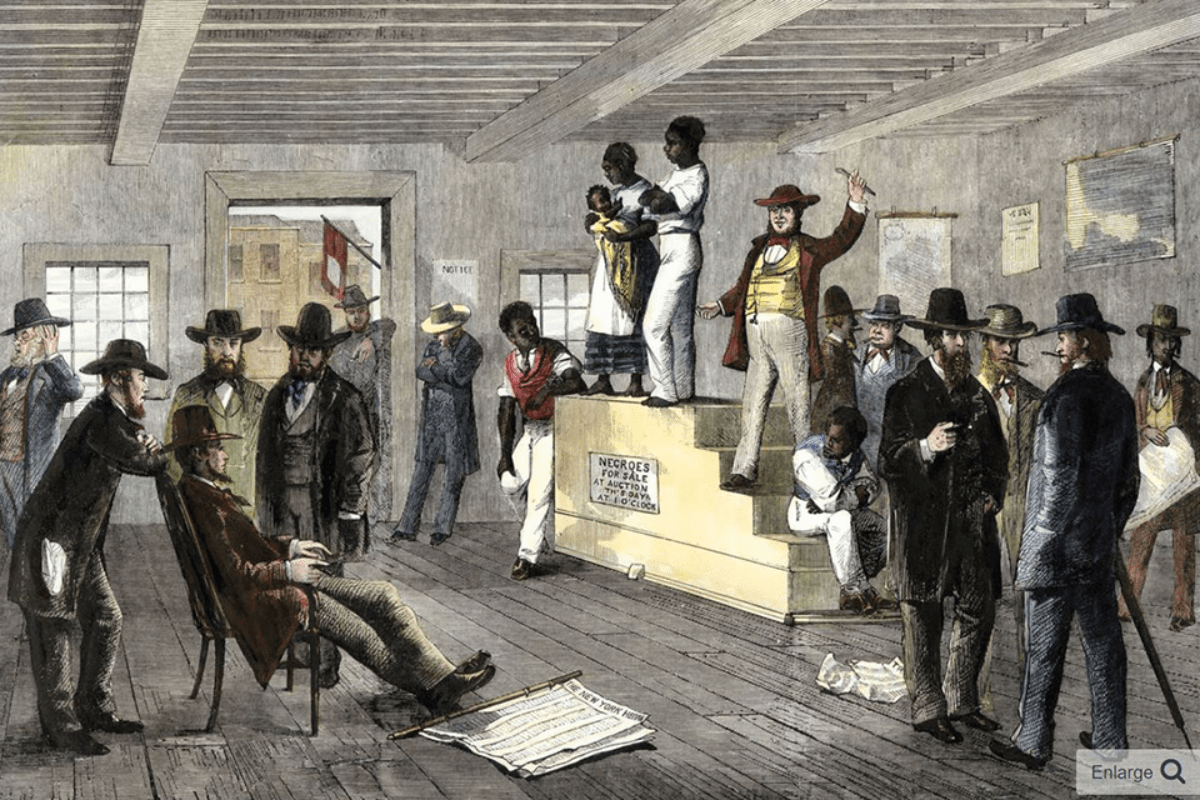
According to a story told by Steve Brown in his book Scandalous Freedom, Lincoln once visited a slave market. There, he saw a young woman being auctioned and began bidding on her. After winning the bidding, Lincoln supposedly told her, “Young lady, you are free.”
Not fully understanding, she asked what that meant.
He explained that she was free to say what she wanted and go wherever she wanted.
With tears streaming down her face, she reportedly answered, “Then what I want to say is that I want to go with you.”
It is a moving story, but I have never found reliable confirmation that it actually happened.
What I did find was a documented story about Lincoln helping secure the freedom of a woman named Nance Legins-Costley—about 20 years before he became president.
Nance had spent much of her life held in servitude in Illinois. Although Illinois was legally a free state, slavery and long-term indentured servitude still existed there in complicated forms. Nance maintained that she had never consented to being indentured and fought through the courts for recognition of her freedom.
After an earlier legal challenge failed, she eventually came to live with David Bailey. Bailey allowed her to live essentially as a free woman, but her legal status remained unresolved. After the man claiming ownership of Nance died, his estate sought payment from Bailey for her. Bailey refused.
The attorney Bailey chose to represent him was Abraham Lincoln.
The case, Bailey v. Cromwell, eventually reached the Illinois Supreme Court. Lincoln argued the case in 1841, and the court ruled that Illinois law presumed every person free regardless of color and that the sale of a free person was illegal.
As a result, Nance and her children were legally free.
It was one of Lincoln’s earliest documented legal efforts on behalf of freedom. Two decades later, as president, he would issue the Emancipation Proclamation and place the power of the presidency behind freedom for millions held in slavery in the rebellious states.
The Bible also uses the language of slavery to describe our condition apart from Christ. We are enslaved to sin and unable to purchase our own freedom.
That is where Jesus enters the picture.
Scripture tells us that we were “bought with a price.” Christ gave Himself for us, paying a price we could never pay and breaking the power of the master who once held us.
We cannot free ourselves from sin simply by trying harder. Our freedom begins with what Christ has already done for us.
And once we are free, what then?
That is where the old Lincoln story—whether historical or not—still offers a beautiful picture.
“I want to go with you.”
That should be our answer to Christ.
Freedom in Christ does not mean being released so that we can wander wherever we please. It means being freed from the master who once held us so that we can follow the One who redeemed us.
Paul wrote about “forgetting what lies behind and straining forward to what lies ahead.” He had been claimed by Christ, and now his life had a new direction.
The same is true for us.
Christ sets us free, not merely from something, but for something—to know Him, follow Him and keep pressing toward Him.
Our answer to the One who paid the price for our freedom should be simple:
“I want to go with You.”
Enjoyed this? Subscribe and get future reflections, bourbon notes, and assorted nonsense delivered straight to your inbox.
Reflection copyright © 2026 Doug DeBolt and Charles Fulton.
