


This is the old nature-or-nurture question, and I’m not sure anyone has ever answered it completely.
Are we shaped primarily by the things that happen to us? Or do we respond to those experiences according to something that was already inside us?
I think the answer is both.
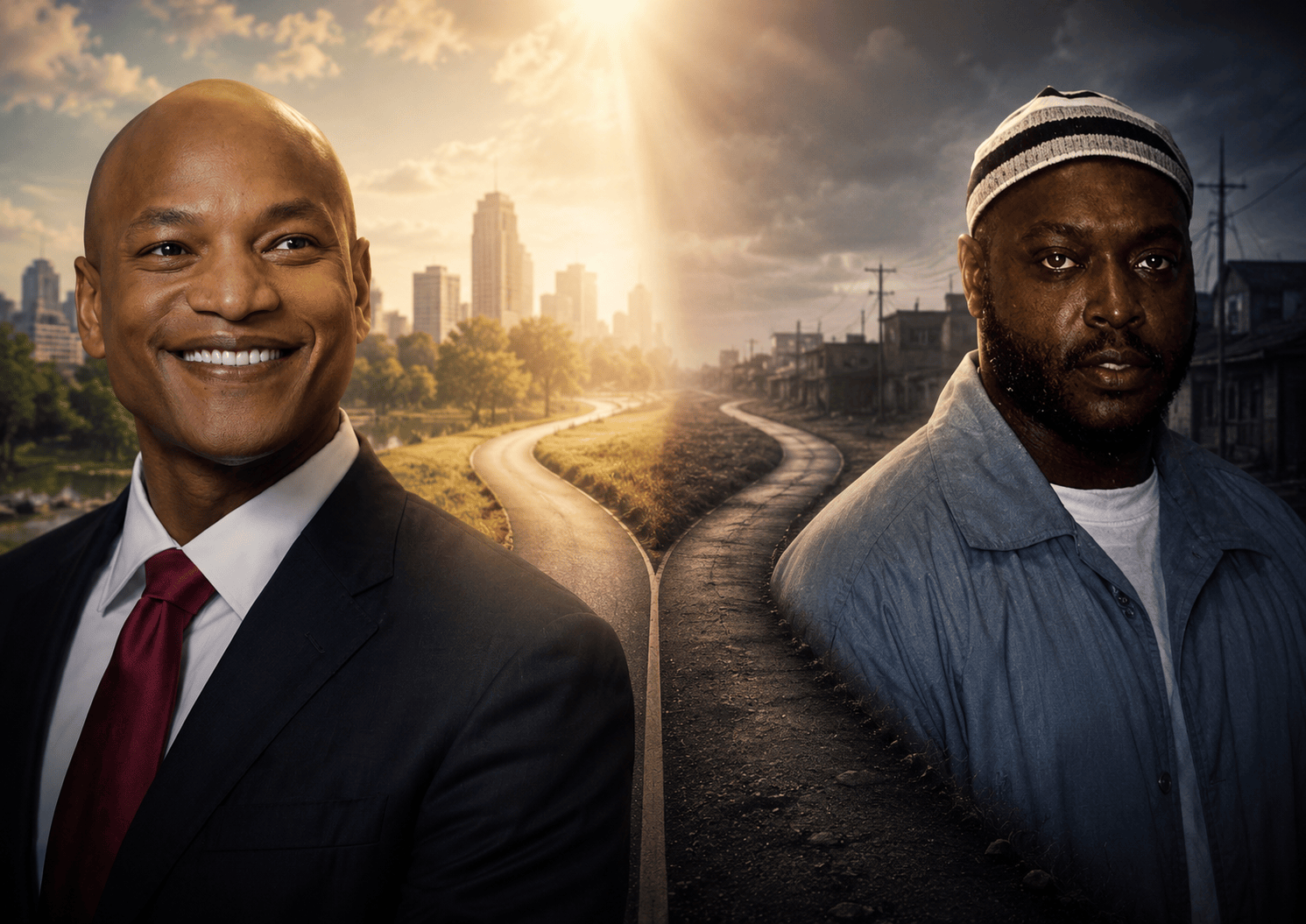 One of the best illustrations I’ve encountered is The Other Wes Moore. The book was written by Wes Moore, who is now the governor of Maryland. It tells the stories of two men with the same name who grew up around the same time, in similar surroundings, and faced many of the same dangers.
One became a Rhodes Scholar, military officer, author and governor.
The other is serving a life sentence for his involvement in a robbery in which a police officer was killed.
It would be easy to look at their lives and say that opportunity made the difference.
The Wes Moore who wrote the book had a mother who fought for him. When he began heading in the wrong direction, she sent him to military school, where he found discipline, structure and people who expected more from him. Other opportunities followed, and he made the most of them.
The other Wes Moore did not receive all of those same advantages. His environment, relationships and circumstances helped push him toward drugs, crime and eventually prison.
Experiences clearly mattered.
But I don’t think opportunities alone explain the difference.
People can be given extraordinary opportunities and waste every one of them. They can receive second chances, third chances and fourth chances without changing their direction. They can be surrounded by people who believe in them and still refuse to listen. They can attend the best schools, come from loving families and have every material advantage imaginable, yet still make choices that damage themselves and everyone around them.
An open door does not matter much if a person refuses to walk through it.
There was something within Wes Moore that allowed the discipline, education and guidance he received to take hold. He eventually accepted correction. He responded to expectations. He learned from people who challenged him. He made choices that allowed one opportunity to lead to another.
That sounds like character.
But then we arrive at the chicken-and-egg problem. Was it his moral character that made the nurturing stick? Or was it the nurturing that developed his moral character?
Perhaps his mother’s love and determination planted the first seeds of character. Perhaps military school watered them. Perhaps mentors helped those qualities grow. But at some point, Wes Moore also had to decide what he would do with everything he had been given.
No one could make that decision for him.
I suspect character and experience spend our entire lives shaping each other.
Our early experiences help form our character. Then our developing character determines how we respond to later experiences. Good guidance may help us make a wise choice. That wise choice may lead to a new opportunity. Taking advantage of that opportunity may strengthen our discipline, confidence and judgment, preparing us to make another good choice later.
Unfortunately, the process can also work in reverse.
Bad influences may contribute to a poor choice. That choice may close doors, weaken relationships and place us around even worse influences. Each step makes the next step in the same direction a little easier.
Still, neither path is completely inevitable.
People rise above terrible childhoods. Others squander wonderful ones. Some people reach adulthood carrying deep wounds but refuse to allow those wounds to determine how they treat others. Some receive every advantage and somehow develop very little gratitude, compassion or integrity.
We are influenced by what happens to us, but we are not merely products of what happens to us.
There is something within us that responds.
As a Christian, I also believe there is Someone beyond us who can intervene. That matters because without God, this discussion can begin to sound fatalistic. We might conclude that people with good character will make good choices, people with poor character will make bad choices, and everyone will simply continue along the path created by childhood, temperament and circumstance.
But the Gospel does not leave us trapped there.
God’s grace can interrupt a path. It can soften a heart that has resisted every previous warning. It can give courage to someone whose experiences taught him to be afraid. It can produce humility in someone who has always been proud, compassion in someone who has been wounded and hope in someone whose circumstances offer very little reason for it.
Scripture is filled with people who were shaped by their experiences but were not permanently defined by them.
Moses was shaped by both Pharaoh’s palace and the wilderness, but God still had more shaping to do. Peter was impulsive, outspoken and sometimes cowardly, but Christ did not discard him. Paul’s education, zeal and personality helped make him who he was, but an encounter with Jesus completely changed what he did with those qualities.
God did not erase their personalities or pretend their pasts had never happened. He redeemed them.
That may be the part missing from many nature-or-nurture arguments.
Our character affects how we respond to our circumstances. Our circumstances help shape our character. But God is capable of working through both, and He is not limited by either.
A loving family can be one of the ways God forms us. So can a teacher, coach, pastor, friend or mentor who enters our life at exactly the right time. Discipline can shape us. Failure can shape us. Consequences can shape us. Mercy can shape us.
Sometimes God uses the opportunities we are given. Sometimes He uses the opportunities we lose. And sometimes He gives us the grace to become someone neither our personality nor our history suggested we would ever be.
Philosophers have debated nature and nurture for centuries, and they will probably debate them for centuries more. I certainly won’t settle the argument in one WordPress post.
But I don’t believe it is either-or.
Our experiences help shape who we are. Who we are affects what we do with our experiences. Our choices become part of the experience that shapes the person we will be tomorrow.
And through all of it, God is still at work.
So which matters more: our experiences or who we are?
I’m going with both. But neither one gets the final word.
God does.
Enjoyed this? Subscribe and get future reflections, bourbon notes, and assorted nonsense delivered straight to your inbox.
Copyright © 2026 Doug DeBolt.

I thought this was well written and presented, and I agree with much of it. In fact, I recently wrote about this same question using two fictional people instead of the real example you presented.
Where the article lost me was when the discussion shifted from evidence to theology.
Up to that point, your observations were grounded in real-world examples of nature, nurture, character, and experience. Readers, regardless of their beliefs or religious background, could follow the discussion and evaluate the ideas based on the evidence you presented.
The strongest part of your piece was your discussion of evidence, character, and the experiences that shape us. That section stood on its own and made for a thoughtful exploration of a difficult question.
When the discussion shifted to God as the answer, the article moved from evidence-based reasoning to a faith-based interpretation. I don’t see that as wrong or inappropriate, but it does narrow the discussion because not every reader begins from the same belief system. Keeping the focus on the evidence would have made an already strong article accessible to an even broader audience.
As soon as the discussion shifted from what we can observe to what we must believe, the article changed from something everyone could examine into something only some readers could fully accept. For me, that was the only point where the article lost some of its universality.
Thank you for giving me something worth thinking about. Those are the posts I enjoy reading most.
Fair enough. I come from a faith-based background, so it’s natural for me to go there, but I understand your point. Ultimately, I don’t think we are shaped purely by genetics or purely by our surroundings. We are a combination of both.
I also believe that the direction we take in life is influenced by the choices we make. I know people who grew up in wretched conditions and became remarkable people. I also know people who grew up with every privilege and remain deeply unhappy. It is not always as simple as “buck up and move forward,” because circumstances can be genuinely difficult and limiting. Still, I do believe personal responsibility and choice are part of the equation.
As always, I really appreciate your thoughtful feedback.