
Before there was the voice, there was Jimmy.
 One day, that voice would roll through theaters like thunder. It would become the sound of command and comfort, menace and majesty. It would make audiences sit up straighter in the dark and make children believe a father’s wisdom could echo from the heavens. Eventually, it would become one of the most recognizable voices in the world.
But that was later.
Today, Jimmy did not have much of a voice at all.
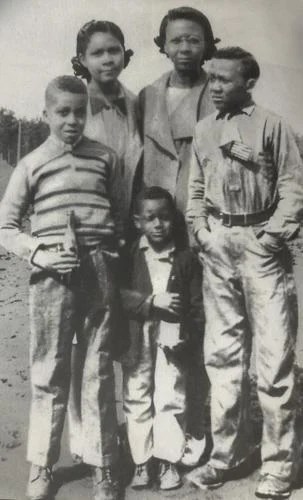 It wasn’t because there was nothing inside him. There was plenty inside him — intelligence, imagination, fear, feeling and poetry, even. The problem was getting it out. Jimmy stuttered, and not with the occasional stumble of a nervous child trying to answer a question in class. His stutter was deep enough, painful enough and humiliating enough that he eventually chose silence over speech. If talking meant struggling, if speaking meant standing exposed while the words locked themselves somewhere between his heart and his mouth, then silence began to feel safer.
So Jimmy became quiet, and the world almost lost one of its greatest voices before it ever heard him.
The silence did not come from nowhere. Jimmy was born in Mississippi in 1931. His father left when Jimmy was very young, chasing a life that eventually led him to acting. When Jimmy was five, he was sent north to live with his maternal grandparents on a farm in Michigan. It was a move he would later describe as traumatic, as if he had been ripped away from the soil of the only world he knew.
 By the time he arrived in Michigan, the stutter had taken hold. His first year of school became his first silent year. Then another. Then another. Years passed, and the boy who would one day be known for the power of his voice barely used it at all.
That is the part we need to sit with for a moment, because it is easy, from the safe distance of history, to treat a famous person’s childhood struggle as nothing more than setup. We already know the ending, so we turn the pain into foreshadowing. The boy with no voice will become The Voice. Isn’t that wonderful?
But Jimmy did not know that.
Jimmy only knew that words were dangerous. Words embarrassed him. Words trapped him. Words made other people wait. Words made the room look at him. So he stopped giving the room the chance.
But silence has a cost of its own. It protects, but it also imprisons. It keeps you from being laughed at, but it also keeps you from being known. Somewhere inside that quiet boy, there were words that still wanted to live, and for Jimmy, those words found their first safe home on paper.
He could write. The words that betrayed him when he tried to speak them behaved differently when he held a pencil. On paper, they waited for him. On paper, they did not rush him. On paper, they did not humiliate him in front of a classroom. They gave him time to think, time to shape, time to revise and time to say what his mouth could not yet manage.
Then came the teacher.
There is almost always a teacher somewhere in stories like this, though the teacher may never fully know how much he matters at the time. At his high school in Michigan, an English teacher named Mr. Crouch noticed the quiet boy. He saw that Jimmy had more inside him than he was willing or able to say aloud. He noticed the writing. He noticed the poetry. And one day, when Jimmy wrote a poem called “Ode to Grapefruit,” Mr. Crouch challenged him to prove he had written it by standing before the class and reading it out loud.
For a moment, Jimmy froze. His throat tightened. The old fear rose up — the fear that told him silence was safer.
 That moment sounds almost cruel until you understand what Mr. Crouch had seen. He had not seen a boy with nothing to say. He had seen a boy hiding behind silence because speech had become too costly. So Jimmy stood in front of the class and read the poem he had written. Because the words were his, because the poem had rhythm, because the page gave him something solid to hold onto, the words came out.
That moment did not magically erase the stutter. Life rarely works that neatly. But it opened a door. It showed Jimmy that the voice he feared had not disappeared. It had only been waiting for a safer way out.
Years later, he would describe the script as a kind of sanctuary, and that phrase explains so much. For most people, a script may feel limiting. For Jimmy, it was protection. A script meant the words were already there. A script meant he did not have to fight the terror of spontaneous speech. A script gave him a place to stand until his own voice could find its footing.
That may be the story between the lines. The voice did not become powerful because words had always come easily. The voice became powerful because he knew what words cost. Every pause mattered. Every syllable mattered. Every line had weight because silence had weight.
Even then, the path ahead was not obvious. Jimmy did not go to college planning to become one of the great actors of his generation. At the University of Michigan, he started as a pre-med student. He was in ROTC. He had reason to believe the Army might send him to Korea. Acting was not yet the grand plan. It was closer to a door he opened because life was uncertain and death felt possible. If war was waiting, why not spend the time he had doing something that made him feel alive?
But Korea was not where he went. He was commissioned as a second lieutenant, trained as an infantry officer, completed Ranger School and was assigned to a cold-weather training unit in Colorado. It is strange to imagine him there — not yet the legend, not yet the voice the world would one day recognize instantly. Just Jimmy, in the cold mountains, still becoming himself.
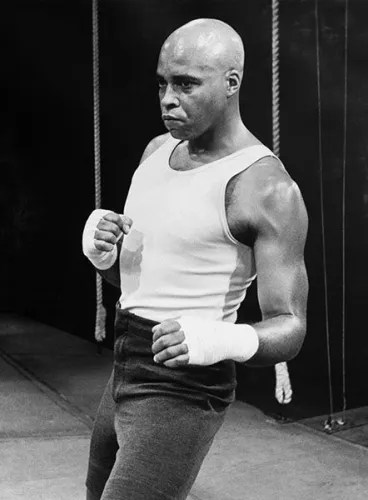 After the Army, he went to New York. He studied acting. He worked as a janitor. He took the long road. There was no instant transformation from silent child to booming icon. There was discipline. There was language. There was theater. There were auditions, failures, small roles, Shakespeare, Broadway and years of learning how to use the instrument he once tried to bury.
And eventually, the world heard him.
We heard him in the darkness of space as a villain, turning evil into something even more terrifying because the voice did not need to shout to command the room. We heard him as a kind and loving father, giving a father’s love a kind of eternal weight. We heard him in speeches, narrations, interviews and performances where the sound itself seemed to carry history. His voice became so famous that it almost seemed detached from the man, as if it had always existed somewhere in the deep places of the earth and had merely chosen him as its instrument.
But of course, that is not true. The voice did not come from nowhere. It came from Mississippi soil and Michigan silence. It came from a child’s wound and a teacher’s faith. It came from a poem about grapefruit, from scripts that became sanctuary, from Army discipline, from stage work, from years of practice and from a man who understood that words are not cheap.
That is why the story matters. We remember the sound. We remember the rumble. We remember the authority, the warmth, the menace and the majesty. We remember a voice that seemed less like something produced by vocal cords and more like something summoned.
But before all of that, there was Jimmy.
A boy far from his first home. A boy wounded by change. A boy whose words would not come when he needed them. A boy who learned to be silent because silence felt safer than shame.
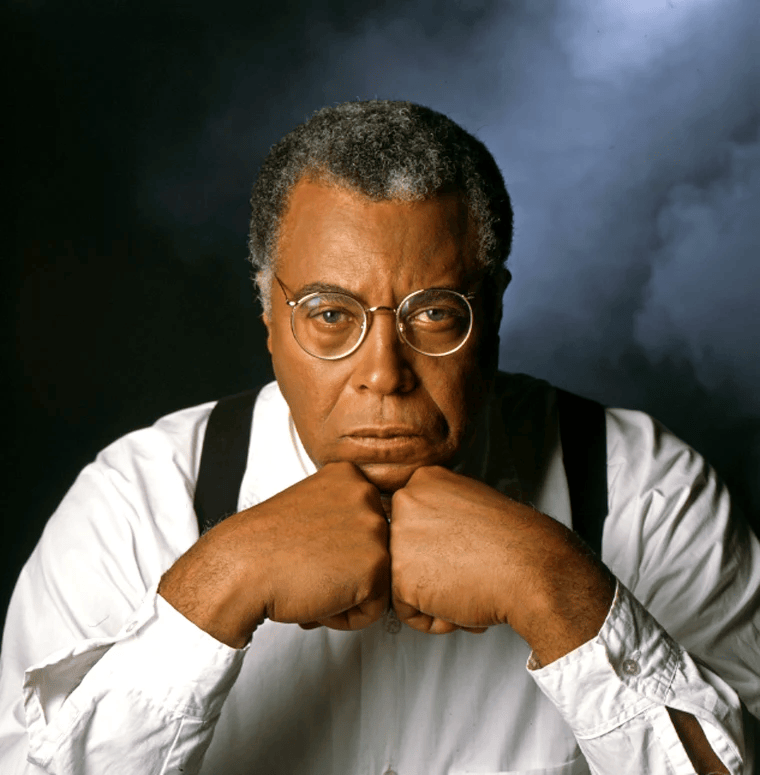 And maybe that is why the voice meant so much when it finally arrived. It was not merely deep. It was not merely famous. It was rescued. It was redeemed. It was the sound of a boy who had been silent finally being heard by the world.
Only near the end of the story do we need the name the world remembers.
The boy who feared his own voice became the man whose voice shaped generations.
James Earl Jones.
And now, when you hear the voice of Darth Vader or Mufasa, you understand its source so much better — because now you have heard the story between the lines.
Enjoyed this? Subscribe and get future reflections, bourbon notes, and assorted nonsense delivered straight to your inbox.
Copyright © 2026 Doug DeBolt.
Share this:
- Print (Opens in new window) Print
- Email a link to a friend (Opens in new window) Email
- Share on Facebook (Opens in new window) Facebook
- Share on WhatsApp (Opens in new window) WhatsApp
- Share on X (Opens in new window) X
- Share on Pinterest (Opens in new window) Pinterest
- Share on Telegram (Opens in new window) Telegram
- Share on LinkedIn (Opens in new window) LinkedIn
- Share on Tumblr (Opens in new window) Tumblr
- Share on Reddit (Opens in new window) Reddit

This was incredibly compelling to read Douglas. I loved how you stayed with Jimmy’s silence long enough for us to feel it, not just read about it. It makes the transformation into such a legendary voice even more powerful.
Tis was a great piece, thanks for sharing.