
 The soldiers had finished their duties for the day and were preparing to return to their barracks when a commanding figure approached them. He wore the uniform of a military officer, and his manner suggested that he had important business to conduct. Whatever plans the men had made for the remainder of their afternoon would have to wait.
The officer informed them that he was acting under orders from the highest authority in the land. He needed men for a special assignment, and they were to accompany him immediately. There was no time for lengthy explanations, and none was expected. In a country where military discipline was deeply ingrained in everyday life, an order from a superior officer was generally sufficient.
The soldiers fell into formation.
Before long, their numbers had grown to approximately ten men, all armed and prepared to carry out their assignment. Their commander led them to a railway station, where they boarded a train bound for a nearby town. It wasn’t an especially long journey, and there was nothing particularly unusual about soldiers traveling on official business. Whatever their destination, the men understood that they had been summoned for an important mission.
Their commander certainly behaved as though he knew exactly what he was doing.
When they reached their destination, he led the soldiers through the streets toward the town’s government offices. The building was impressive, an imposing structure that represented the authority of the local government. Inside, officials went about their daily business, attending to the ordinary affairs of the community.
That ordinary afternoon was about to become anything but ordinary.
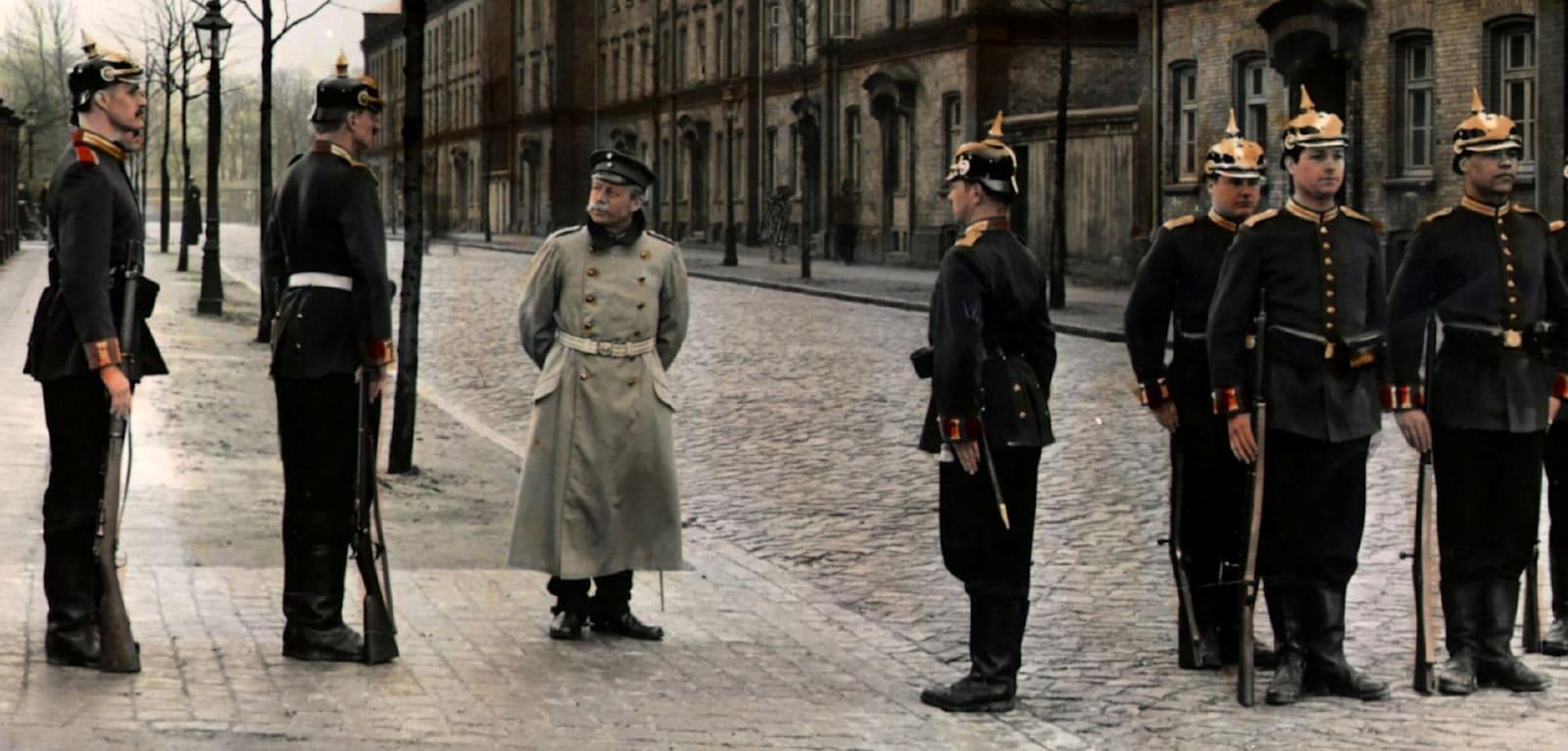 The officer ordered his soldiers to surround the building and secure the entrances and exits. Nobody was to leave without permission. Local police officers were instructed to maintain order outside, ensuring that curious citizens would not interfere with the operation. The military had apparently taken control of the premises, and the local authorities saw little reason to challenge the situation.
After all, these were armed soldiers carrying out what appeared to be an official assignment.
With the building secured, the officer proceeded to the offices of the town’s senior officials. He announced that the mayor was under arrest, acting in the name of the country’s ruler. Another senior official was detained as well. The allegations concerned supposed irregularities in the administration of the town’s affairs, although the precise nature of the suspected wrongdoing was apparently less important than the authority behind the accusations.
The mayor was understandably surprised. This was hardly the sort of interruption one expected during an ordinary day of municipal government. Nevertheless, the orders had been given, the soldiers were standing guard, and the officials found themselves under military custody.
It was an extraordinary development. But the day’s most extraordinary event was still to come.
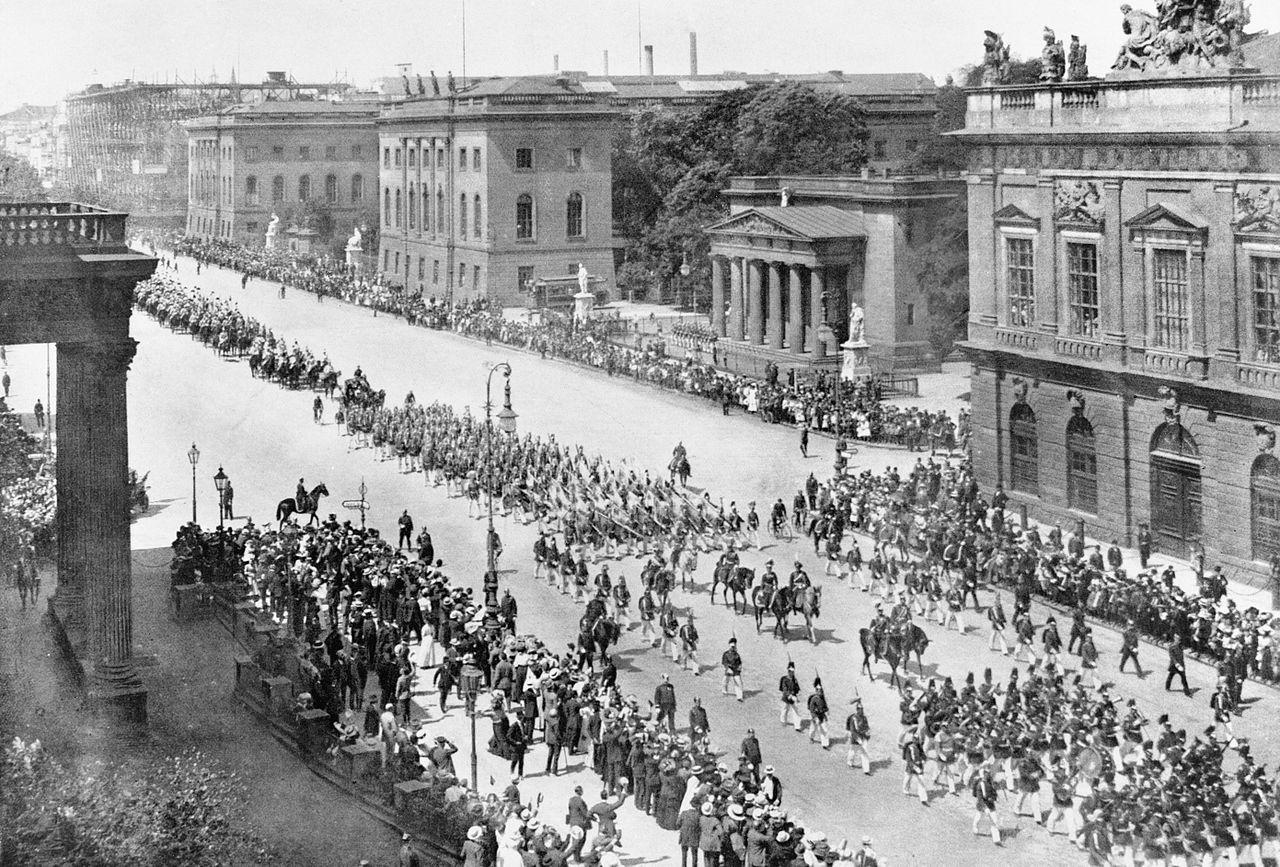 Having secured the building and detained its leading officials, the officer turned his attention to the municipal treasury. He demanded an accounting of the available funds and ordered the money surrendered into his custody. The officials complied, eventually producing several thousand marks in government funds.
There was even a receipt.
That’s right. The man who had arrived with armed soldiers, seized control of the town hall, arrested its officials and confiscated its treasury provided a written acknowledgment of the transaction. Whatever anyone might have thought about the unusual proceedings, he appeared determined to observe at least some of the formalities of government business.
By now, his operation was nearly complete.
The detained officials were sent under guard to the capital, where the appropriate authorities were supposedly waiting to receive them. The remaining soldiers were ordered to maintain their positions for another half hour. They would keep the building secure until the operation could be concluded.
As for their commander, he had other business to attend to.
 He walked away from the town hall, leaving his soldiers at their posts. Curious onlookers watched him depart. He made his way toward the railway station, where he reportedly stopped for a quick beer before boarding a train back to the capital.
And just like that, the commanding officer was gone.
It wasn’t long before questions began to arise. The authorities attempted to determine who had ordered the arrests and confiscation of the treasury. Surely someone in the military command structure knew what had happened. Surely there had been some official authorization for an operation of this magnitude.
But the more questions they asked, the more peculiar the answers became.
The military had issued no such orders. The arrests had not been authorized. The money had not been legally confiscated. And the officer who had so confidently directed the entire operation could not be accounted for through the proper military channels.
There was a simple explanation, although it was one that would leave officials throughout the country thoroughly embarrassed.
The man who had commanded the soldiers wasn’t an officer at all.
In fact, he had never served in the army.
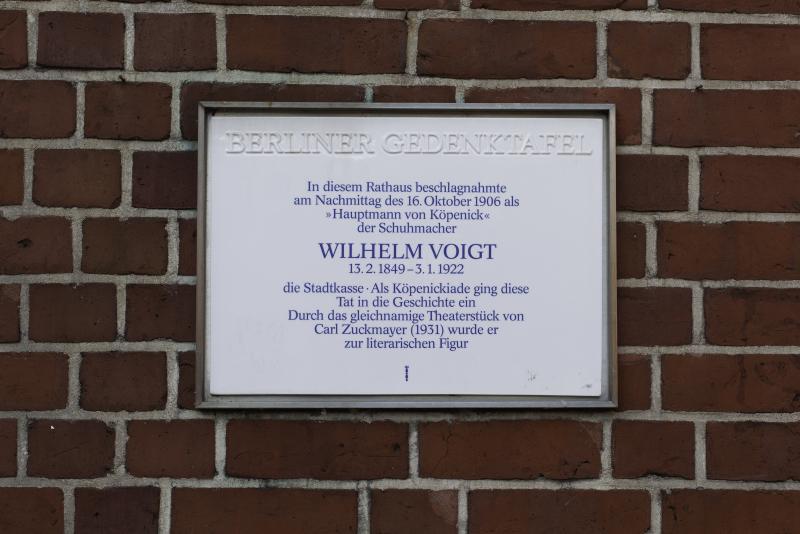
His name was Friedrich Wilhelm Voigt, and he was a fifty-seven-year-old shoemaker with a criminal record that stretched back decades. He had spent roughly half his life in prison for various offenses, including theft and forgery. When he was released from his most recent imprisonment, he discovered that making an honest living would be considerably more difficult than he had hoped.
 Part of the problem was an unforgiving bureaucracy. He needed proper authorization to establish residency and find stable employment, but his criminal history made securing those permissions extraordinarily difficult. Without employment and the appropriate documents, he struggled to obtain the stability that might have allowed him to leave his criminal past behind.
It was a maddening situation, and Voigt eventually developed an audacious plan.
He began collecting pieces of a military uniform from secondhand dealers, assembling the appearance of a captain in the Prussian army. There was nothing official about his appointment because there had been no appointment. His uniform was authentic enough to look convincing, but the authority it represented existed entirely in the minds of the people who saw him wearing it.
On October 16, 1906, Voigt put his plan into action.
The soldiers he commandeered near Berlin had no idea that the man issuing their orders was an unemployed former convict. The officials in the town of Köpenick had no reason to suspect that the apparent military operation was actually an elaborate robbery. The mayor, Georg Langerhans, found himself under arrest because a man wearing the appropriate clothing had declared that he should be.
And the government treasury was relieved of approximately 3,557 marks because Voigt had convinced everyone involved that he possessed the authority to take it.
The uniform was convincing. The orders were convincing. The soldiers were real. And nobody had stopped to verify whether the man giving the commands was actually entitled to give them.
 Voigt’s freedom didn’t last long. Ten days later, acting on information supplied by a former fellow prisoner, police arrested him. His story had already become a sensation, and newspapers delighted in recounting how one man had made fools of the military and civilian authorities alike.
The courts weren’t nearly as amused. Voigt was convicted and sentenced to four years in prison. But the public regarded him with considerable affection, seeing in his extraordinary escapade a pointed criticism of a society that placed enormous importance on rank, uniforms and unquestioning obedience.
Even Kaiser Wilhelm II reportedly found the episode amusing. In August 1908, after Voigt had served less than two years of his sentence, the emperor pardoned him.
The former shoemaker emerged from prison as something of a celebrity. His likeness appeared on postcards, audiences paid to hear him recount his adventure, and his exploits eventually inspired theatrical productions and motion pictures. The man who had once struggled to find a place in society had become famous for demonstrating just how easily that society could be manipulated.
There is something wonderfully ironic about the entire affair. Here was a man who couldn’t obtain the government’s permission to establish an ordinary life, yet he managed to take control of a government building, arrest its officials and empty its treasury simply by dressing as someone who possessed authority.
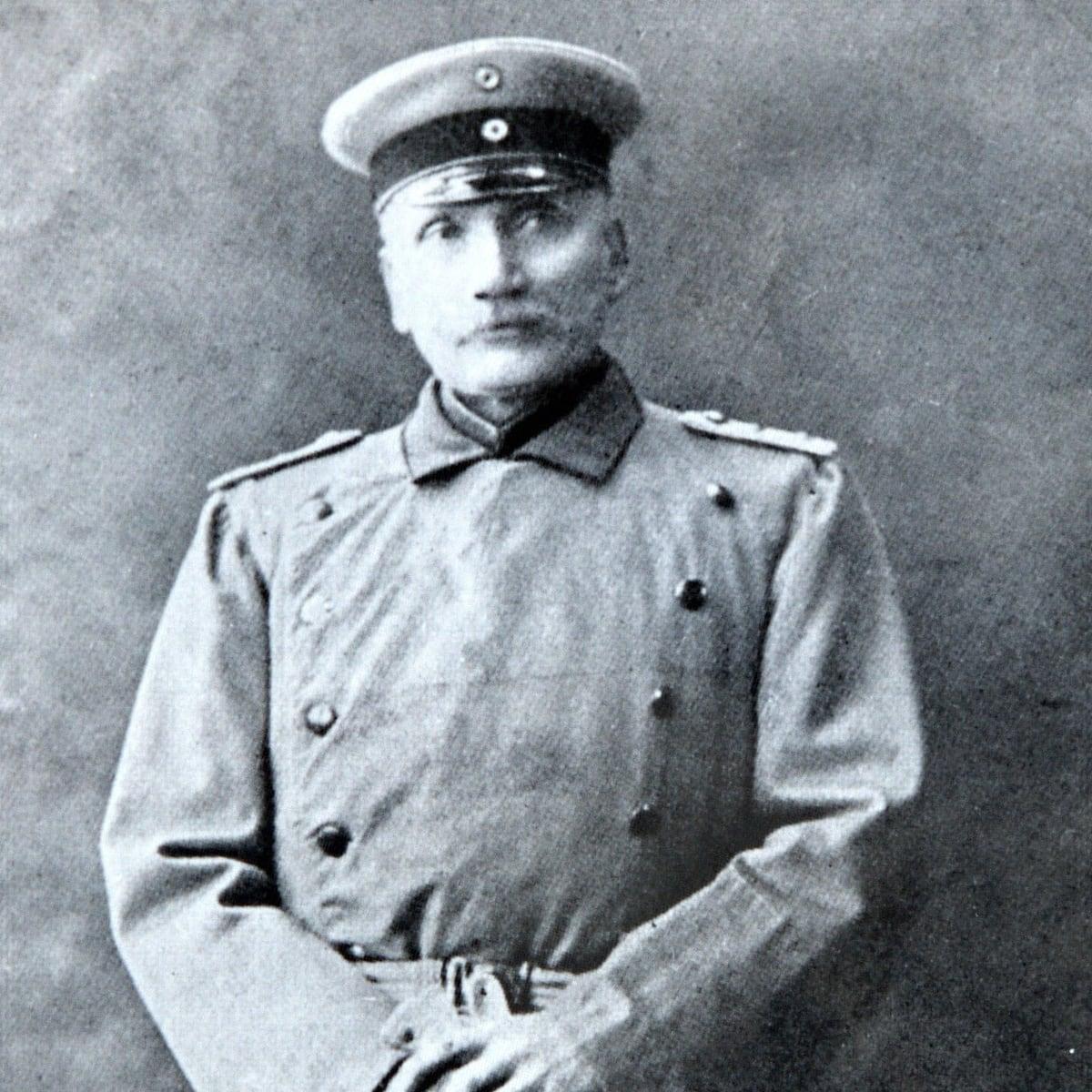 Of course, Voigt was no innocent victim. He had committed a real crime, and the money he took belonged to the public. But the crime exposed a weakness considerably larger than the man responsible for it.
It revealed what can happen when people stop distinguishing between authority and the appearance of authority.
One hundred and twenty years ago, a man put on a secondhand military uniform and discovered that he could command soldiers, arrest government officials and walk away with thousands of marks without ever having earned a single stripe on his sleeve.
The world came to know him as the Captain of Köpenick.
But perhaps the most remarkable part of the story isn’t that a shoemaker managed to fool an entire town. It’s that nobody thought to ask whether he was really a captain.
And that’s the story between the lines.
Enjoyed this? Subscribe and get future reflections, bourbon notes, and assorted nonsense delivered straight to your inbox.
Copyright © 2026 Doug DeBolt.
