Long before anyone knew him as a writer, he had already lived the kind of life that would have sounded ridiculous if someone had made it up.
 He was exceptionally tall, eventually reaching about 6-foot-6, and as a boy he was sent away to British boarding schools where punishment could be brutal. His enormous height eventually led to a nickname, “Lofty,” and Lofty would later remember adults who exercised enormous power over children, and children who had very little power to fight back.
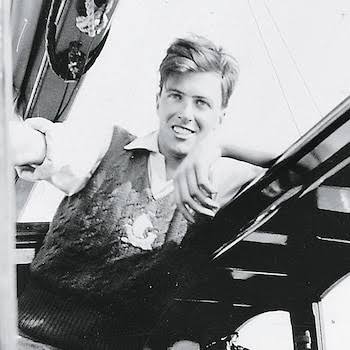
Then he grew up, went to work in Africa and watched the world go to war. So he became a fighter pilot.
That almost killed him.
Flying over the North African desert in 1940, Lofty became lost and ran short of fuel. His aircraft struck the ground during a forced landing, badly injuring him before bursting into flames. Somehow, he escaped. After months of recovery, he returned to flying and eventually to combat, only for the lingering effects of the crash to help bring his career as a fighter pilot to an end.
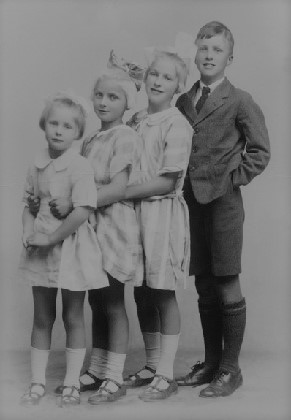 That might have been enough adventure for one lifetime. Instead, they sent Lofty to Washington.
Officially, the wounded young officer became an assistant air attaché at the British Embassy. Unofficially, his life became considerably more interesting.
Lofty moved through wartime Washington society, spent time around some of the most powerful people in America and became involved with a British intelligence operation interested in what those powerful Americans were thinking and saying. He spent time with Franklin and Eleanor Roosevelt. He played tennis with Vice President Henry Wallace. He listened.
And some of what he heard found its way back across the Atlantic.
Then another writer asked Lofty for a favor.
C.S. Forester, already famous as the creator of Horatio Hornblower, wanted to write about the young pilot’s wartime experiences and asked him to put some details on paper. So he did. Forester read what the pilot had written and discovered that he had a problem.
 There wasn’t much for a professional writer to do with it. Because Lofty could already write.
The resulting story appeared in The Saturday Evening Post, and almost accidentally, a new career began.
Before long, the former pilot was writing about the little creatures RAF airmen liked to blame whenever something mysteriously went wrong with an airplane. They called them gremlins.
That story caught the attention of Walt Disney. A movie was discussed. A children’s book appeared. The movie never happened, but the writing did not stop.
And then the stories began to get darker. Much darker.
 There was the seemingly harmless old woman who welcomed young men into her home, only for the reader to realize that her guests had a disturbing habit of never leaving.
There was the wife whose husband told her he was leaving, prompting her to kill him with a frozen leg of lamb, cook the murder weapon and serve it to the police officers investigating his death.
There was the strange little man who offered people a chance to win his Cadillac, provided they were willing to risk one of their fingers.
There was the gambler aboard an ocean liner who realized he was about to lose heavily, jumped overboard to force the ship to turn around and carefully made sure someone saw him do it. Unfortunately, he chose the wrong witness.
These were stories about murder, mutilation, greed, revenge and the moment when an ordinary situation suddenly tilted into something grotesque.
 They were also often funny. That may have been the strangest part.
Lofty understood that horror and humor could occupy the same room. A woman could murder her husband, then calmly watch the police eat the evidence. A finger could become the stake in a ridiculous wager. A harmless bed-and-breakfast could become something much more sinister.
The world he wrote about was dangerous, but it was also absurd. Life itself kept supplying him with enough material.
Years later, after Lofty’s infant son suffered a devastating brain injury, the writer did something unusual. He became involved with a neurosurgeon and an engineer in developing an improved medical device used to relieve pressure on the brain.
He was not a doctor. He simply saw a problem affecting his child and refused to leave it alone.
His life would include other tragedies as well, along with fame, marriage, children and eventually an increasingly successful literary career. And through all of it, the same peculiar imagination kept working.
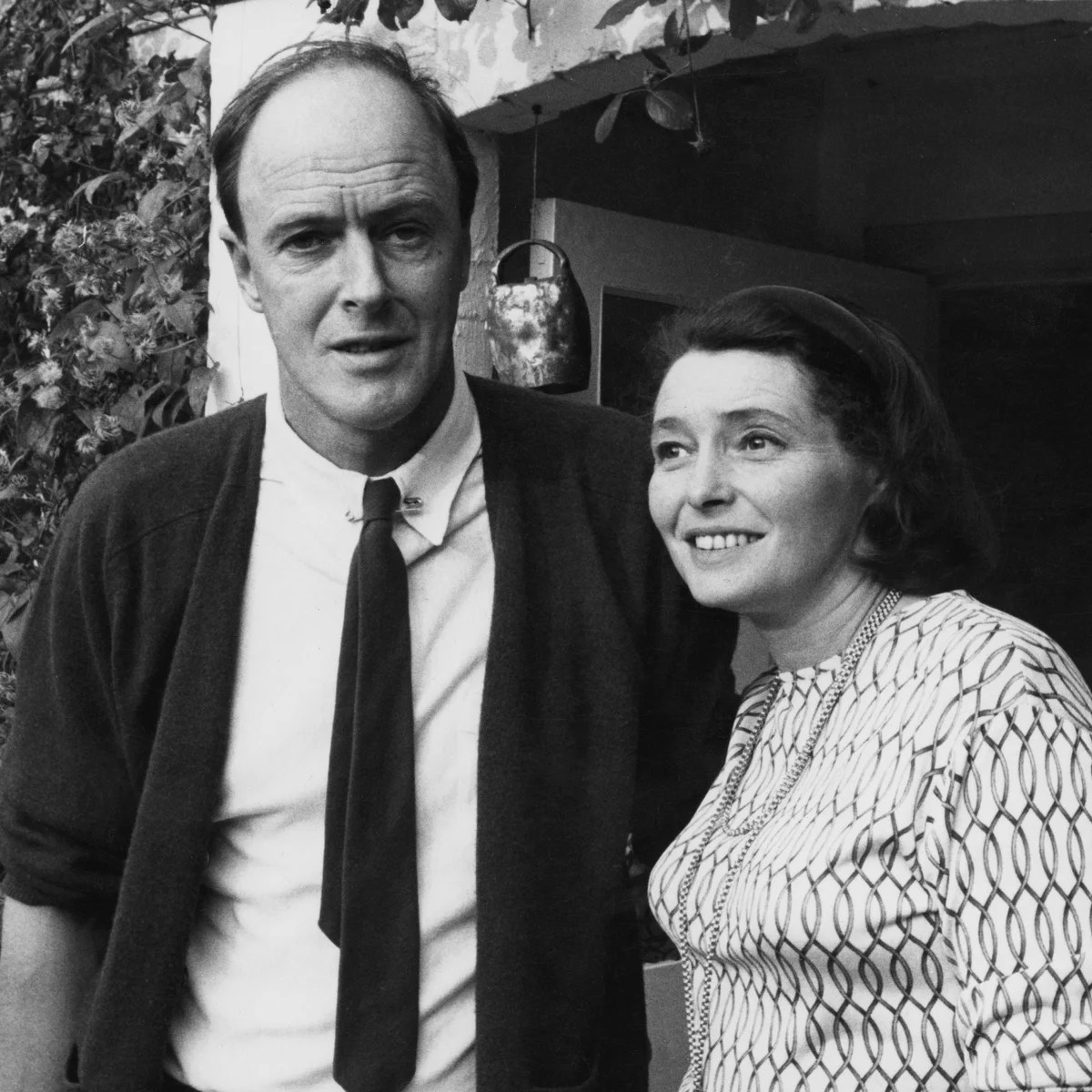 Then something happened that should have required him to change almost everything about the way he wrote.
Lofty began writing for children. But the tone of his stories barely changed at all.
One story followed an abused orphan who escaped two horrible aunts by climbing inside an enormous peach and befriending giant insects.
Another introduced children to a mysterious chocolate maker whose factory was filled with wonders, along with a collection of badly behaved young visitors who met increasingly bizarre consequences.
There was a terrifying school administrator who hurled children around by their hair. Women whose secret ambition was to eliminate children altogether. Giants who considered children an acceptable meal. Cruel adults, selfish adults, foolish adults and dangerous adults.
 And again and again, the children survived them. Sometimes they defeated them. Sometimes they escaped them. Sometimes the adults received exactly the grotesque punishment they deserved.
Generations of children loved every bit of it. Maybe that was because Lofty understood something adults often forget.
Children already know the world can be unfair. They already know adults can be cruel. They already understand fear, embarrassment, helplessness and the sensation of being small in a world controlled by people much bigger than they are.
He did not need to hide those things from them. He simply turned them into stories. He added magic. He added absurdity. He added giant fruit, chocolate rivers, telekinetic children, witches, enormous insects and friendly giants.
But he never entirely removed the darkness.
By now, some readers probably know exactly who this man was.
 The fighter pilot. The intelligence-connected officer in wartime Washington. The accidental writer discovered by C.S. Forester. The man whose early work caught Walt Disney’s attention. The father who helped develop a medical device after tragedy struck his family. The writer who could imagine a landlady preserving her guests, a wife serving a murder weapon for dinner and a gambler willing to risk someone else’s finger.
And the man who later gave children James, Matilda, the BFG and Willy Wonka.
His name was Roald Dahl.
Most of us met him through chocolate rivers, giant peaches, witches, enormous insects and a girl named Matilda.
But long before any of them existed, there was a boy learning that adults could be cruel, a young man discovering that the world could turn deadly without warning, and a writer becoming fascinated by the dangerous things that could hide behind perfectly ordinary appearances.
Maybe that is why his children’s stories never pretended childhood was completely safe. Dahl knew better.
 He filled his books with cruel adults, frightening situations and consequences that could be downright grotesque. But he also gave his children something the boy he once was did not always have.
A way to fight back.
And once you know the life that came before Willy Wonka, Matilda, James and the BFG, those stories look just a little different.
Because now you’ve seen the story between the lines.
Enjoyed this? Subscribe and get future reflections, bourbon notes, and assorted nonsense delivered straight to your inbox.
Reflection copyright © 2026 Doug DeBolt.
