Tommy was born in Edinburgh, Scotland, in 1930, and there wasn’t much about his childhood that suggested glamour was waiting for him.
 His father drove trucks and worked in a factory. His mother cleaned houses. The family lived in a crowded tenement in Fountainbridge, a working-class neighborhood where money was scarce and comforts were fewer. One story says that when Tommy was a baby, his bed was the bottom drawer of a cupboard.
By the time he was eight or nine, he was already delivering milk in the mornings. He left school in his early teens and went to work full time.
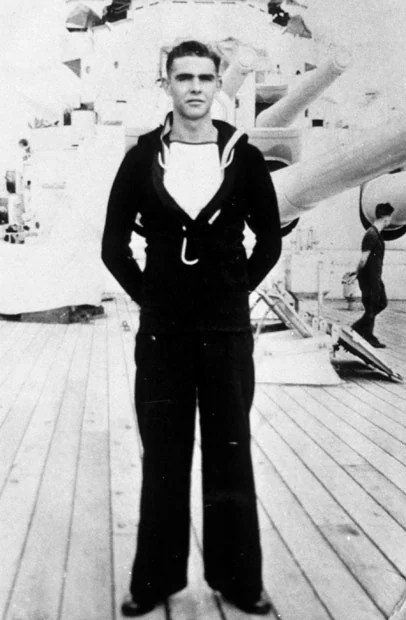
At 16, Tommy joined the Royal Navy. Maybe that would be his future.
It wasn’t.
After about two years, duodenal ulcers earned him a medical discharge. He returned to Scotland without much education, without a career and without any particular reason to believe that life was about to become easier.
So Tommy did what people in his position often have to do. He worked wherever he could find work. He mixed cement, laid bricks, bent steel and drove trucks. He worked as a lifeguard. At one point, he polished mahogany coffins.
 It would be difficult to invent a résumé that sounded less like the beginning of a remarkable life.
Then Tommy discovered that his body might provide him with opportunities his education couldn’t. He began lifting weights seriously and built an impressive physique. He also found another source of income at the Edinburgh College of Art.
For a while, one of the better-paying uses for Tommy’s physique involved taking off his clothes while strangers stared at him.
They were art students.
Tommy worked as a nude model.
Bodybuilding eventually took him to London in 1953, where he competed in the Mr. Universe competition and earned a bronze medal in the tall men’s division. While he was there, he heard that a production of South Pacific needed men for its sailor chorus.
There was just one problem.
Tommy wasn’t a singer.
He wasn’t much of a dancer, either.
 But he looked like a sailor, and apparently that was enough.
He got the job.
It still wasn’t necessarily the beginning of a career. Tommy was also a very good football player, and while South Pacific was playing in Manchester, he caught the attention of one of the most important men in English football.
Matt Busby managed Manchester United. Busby saw Tommy play and offered him a professional contract.
For a young man who had grown up with very little, it must have seemed like an extraordinary opportunity. Tommy loved football, and Manchester United was one of the biggest clubs in England.
He turned Busby down.
Tommy looked at the careers of professional footballers and realized that even successful ones were usually finished while they were still young. Whatever he was doing on stage might last much longer.
So the former milkman, sailor, bricklayer, coffin polisher, nude model and bodybuilder decided he would rather take his chances in show business.
 And he took it seriously.
Tommy understood that he didn’t have the education or training of many of the people around him. So he began educating himself. He read voraciously. He studied acting. He worked in repertory theater and took whatever parts he could find. He eventually moved into television and then movies.
Nothing happened overnight.
There were small parts and forgotten productions. There were roles that paid the bills without making anyone famous. But Tommy was learning something that couldn’t necessarily be taught in a classroom. He learned how to move, how to stand and how to occupy a room.
People began noticing him.
Eventually, two movie producers were trying to cast the lead in a new film based on a popular series of novels.
Their character was supposed to be sophisticated, educated and perfectly comfortable around expensive clothes, expensive cars and expensive women.
Tommy had grown up sleeping in a tenement.
Their character belonged naturally in casinos and luxury hotels.
Tommy had delivered milk and polished coffins.
Their character seemed as though he had been born knowing which fork to use.
 Tommy had left school as a boy.
On paper, the whole thing made very little sense.
But producers Albert “Cubby” Broccoli and Harry Saltzman saw something in him that a résumé couldn’t explain.
After one meeting, they watched Tommy walk away. Saltzman later remembered that he moved “like a jungle cat.”
That was what they were looking for.
The sophistication could be polished. The clothes could be tailored. But the danger had to be real.
So they gave Tommy the part.
In 1962, the former Edinburgh milkman found himself sitting across a casino table from actress Eunice Gayson. Her character introduced herself as Sylvia Trench and then asked his name.
He answered with three words.
“Bond. James Bond.”
It was the first time an actor had delivered that introduction on a movie screen, and almost instantly the man saying it became inseparable from the man he was playing.
 By then, Tommy was no longer Tommy to the rest of the world.
Thomas Sean Connery had become Sean Connery.
The transformation was almost ridiculous when you traced it backward. The sophisticated secret agent in the dinner jacket had once delivered milk from a horse-drawn cart. The man who looked perfectly at home in casinos and luxury hotels had mixed cement, laid bricks and polished coffins. The international symbol of masculine confidence had once stood naked in front of art students because he needed the money.
And he had almost walked away from all of it for football.
Even Ian Fleming wasn’t convinced at first. The creator of James Bond had imagined someone more polished, more aristocratic, more obviously suited to the role. Connery was a working-class Scotsman with rough edges that hadn’t completely disappeared.
But those rough edges turned out to be part of the magic.
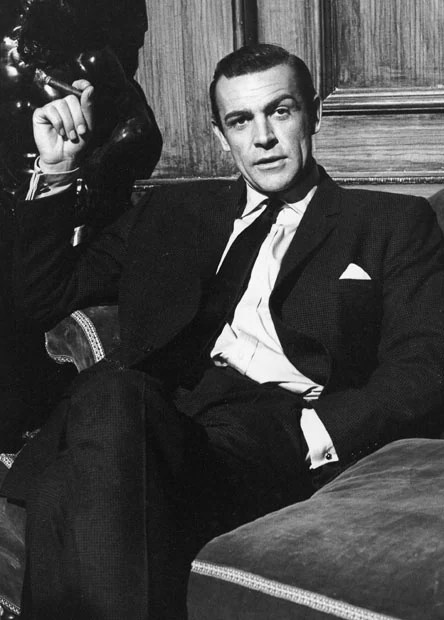 Connery didn’t simply play Bond as a sophisticated gentleman. He gave him something underneath the tuxedo—something dangerous, physical and slightly unpredictable. Fleming eventually came around so completely that he gave Bond Scottish ancestry of his own.
Think about that.
The man originally considered wrong for James Bond eventually changed James Bond.
And the boy who grew up with almost nothing in an Edinburgh tenement became, for millions of people, the very image of elegance, danger and cool.
Most of the world would remember the name Sean Connery.
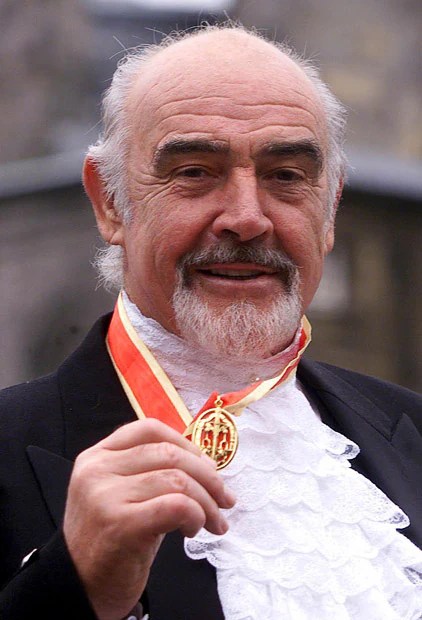 But before the tuxedo, before the Aston Martin, before the martinis and before anyone asked for his name across a casino table, he was simply Tommy—a milkman, a sailor, a laborer, a coffin polisher, a nude art model, a bodybuilder and a footballer who turned down Manchester United.
Somewhere between all of those lives, Tommy Connery became Bond.
James Bond.
And that is the story between the lines.
Enjoyed this? Subscribe and get future reflections, bourbon notes, and assorted nonsense delivered straight to your inbox.
Copyright © 2026 Doug DeBolt
