


If I could erase one trend from history, I would erase the rise of social media.
That probably sounds extreme, especially because social media has done some good. It has helped old friends reconnect. It has allowed families separated by hundreds or thousands of miles to remain part of one another’s lives. It has given small businesses an inexpensive way to reach customers and has helped people share information quickly during emergencies.
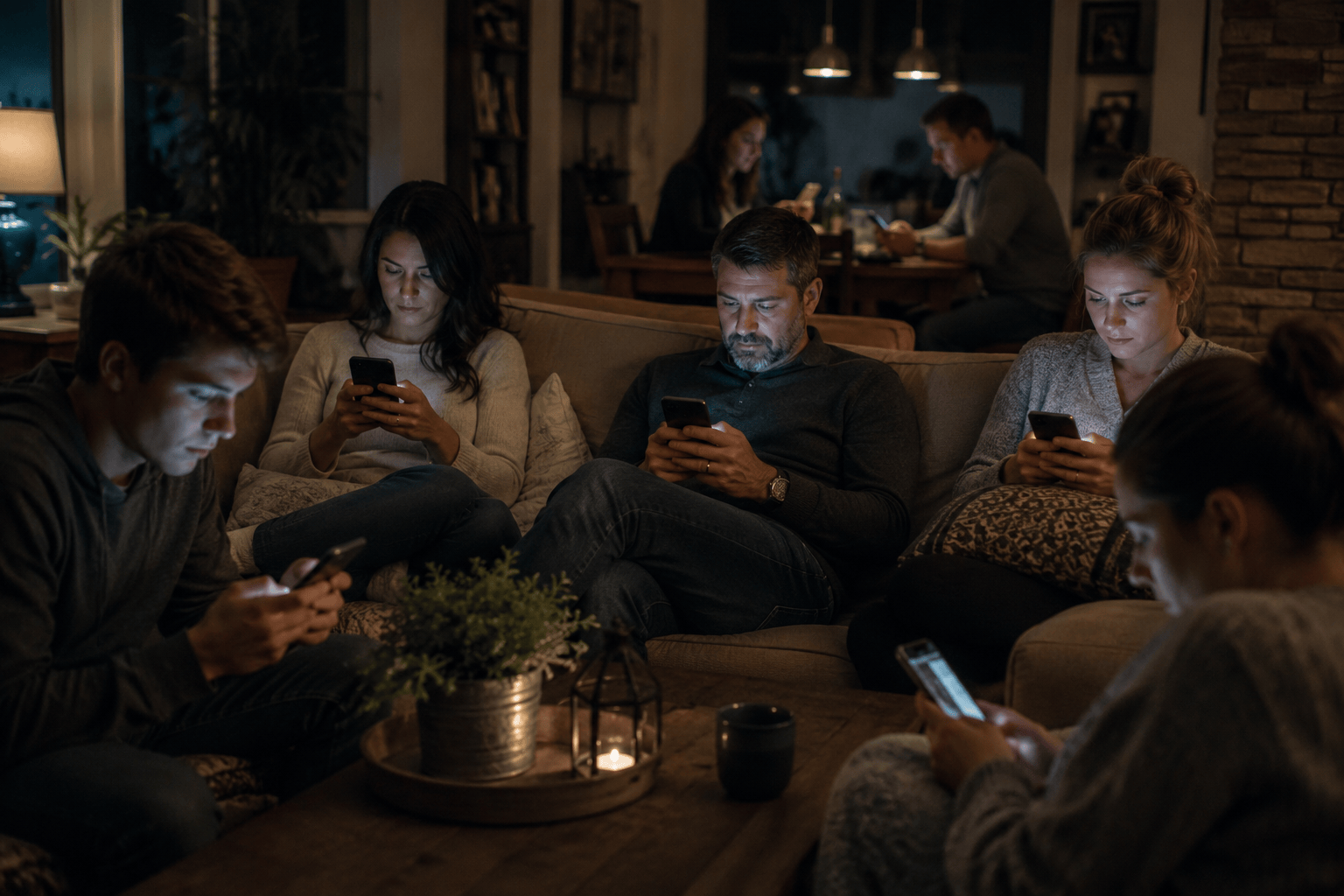 But somewhere along the way, social media stopped being a tool we used and became something that uses us.
The cellphone made us constantly available, but social media made us constantly connected to the entire world. There was a time when you could leave the house and be unavailable until you returned. There was a time when people had to wait before reaching you, and sometimes that waiting gave them time to decide that whatever seemed so urgent really was not.
Now, every thought can be shared immediately.
That is rarely a good thing.
Social media has convinced many people that their lives are more interesting than they really are. Meals must be photographed. Vacations must be documented. Opinions must be posted. Every minor inconvenience becomes a story, and every passing thought seems worthy of an audience.
We stopped simply living our lives and began producing them.
The problem is not that ordinary life is unimportant. Ordinary life is where most of our greatest blessings are found. The problem is that social media encourages us to turn those moments into performances. Instead of enjoying the meal, we photograph it. Instead of watching the sunset, we record it. Instead of talking to the person sitting across from us, we check to see whether someone else has responded to what we posted.
We are physically present but mentally somewhere else.
Social media also convinced us that newspapers and magazines were no longer necessary because we could have all the news in the world at our fingertips. Technically, that is true. We have access to more information than any generation in history.
But access to information is not the same thing as being informed.
A newspaper placed a collection of stories in front of us. There was national news, local news, sports, politics, business, entertainment and opinion. We encountered stories we cared about, stories we did not care about and stories we did not even know existed.
Social media gives us what we already want.
The algorithms learn our interests, our fears, our beliefs and our prejudices. Then they feed us more of the same. We click the stories that confirm what we already believe and ignore the stories that might challenge us. We choose the voices that agree with us and gradually become convinced that every reasonable person must see the world exactly as we do.
That has helped drive us apart politically and socially.
People no longer merely disagree. They become offended. Offense becomes outrage, and outrage becomes hatred. The person on the other side of an issue is not simply mistaken. That person is stupid, evil or dangerous.
Social media did not create human pride, anger or fear. Those things have always existed. What social media did was give them a microphone, an audience and a reward system.
Anger gets attention. Fear gets clicks. Outrage keeps people engaged.
Politicians understand this. Media companies understand it. Advertisers understand it. They know frightened and angry people are easier to manipulate, so fear is sharpened, packaged and delivered directly to our screens.
The twenty-four-hour news cycle feeds the process because there must always be something new to discuss, even when nothing new has actually happened. Speculation fills the empty space. Rumors become headlines. Opinions are presented as facts, and misinformation travels around the world before the truth has finished putting on its shoes.
The truth is often easy to verify, but verification requires patience. Social media rewards speed.
People see something shocking and immediately share it. They do not stop to ask whether it is true because it feels true, and feeling has become more important than evidence. By the time the story is corrected, the false version has already been seen, shared and believed.
Local journalism has suffered along the way. Newspapers that once sent reporters to city council meetings, school board meetings, courtrooms and local events have disappeared or been reduced to shadows of what they once were. Important local stories go uncovered because people have become accustomed to receiving information for free, even though reliable reporting has never been free to produce.
We have more news than ever and fewer reporters watching the places closest to home.
Social media has also encouraged cruelty.
When someone says or does something foolish, people pull out their phones. They record the mistake, post it online and invite the world to laugh. There is little concern for context, mercy or whether the person’s worst moment should follow them forever.
We have convinced ourselves that foolish people deserve public embarrassment.
The screen gives people a sense of protection. They say things online they would never say to someone’s face. They insult strangers, attack friends and tear apart family members, all while sitting safely in another room.
Then they wonder why relationships feel fragile.
Neighbors do not talk. Families sit together while staring at separate screens. Friends misunderstand one another through messages that carry no tone of voice, facial expression or warmth. People have lost some of their ability to communicate verbally because difficult conversations are replaced by texts, posts and carefully constructed statements.
Even businesses have followed the same path. Technology that made people seem less personal eventually encouraged companies to treat customers like machines.
Customer service became automated menus, prerecorded voices and chat systems that rarely understand what the customer is asking. A person with a simple problem is forced through a maze designed to prevent contact with another human being.
We are told technology makes everything more convenient, but convenience often seems to mean making things easier for the company and more aggravating for the customer.
At the same time, we are constantly encouraged to buy the newest device. The phone that seemed miraculous two years ago is suddenly too old. The camera is not quite sharp enough. The processor is not quite fast enough. The storage is not quite large enough.
We chase the latest technology because we fear being left behind in the technological shuffle.
Yet the more we buy, the less satisfied we become.
Social media encourages comparison, and comparison is a thief. We look at carefully selected images of other people’s homes, vacations, marriages, careers and families, then compare their polished highlights to our unedited lives.
We pursue happiness by buying things, collecting approval and hoping people will admire us. But admiration is temporary, possessions grow old, and attention disappears the moment something more interesting comes along.
None of it satisfies because none of it was ever meant to.
Maybe that is the greatest damage social media has done. It has made us feel connected while leaving us lonely. It has given us more voices while weakening conversation. It has brought the world closer while pushing the people beside us farther away.
It fills every quiet moment.
Silence becomes uncomfortable, so we reach for the phone. Waiting becomes unbearable, so we scroll. We no longer have to sit alone with our thoughts, examine our hearts or listen for the still, small voice of God.
The device is always ready to distract us.
I do not believe every person needs to delete every account or throw away every phone. Social media remains a tool, and tools can be used wisely.
But tools are supposed to serve their owners.
Somewhere in the past two decades, that relationship became reversed. Social media became our newspaper, our marketplace, our town square, our stage, our judge and our source of approval.
It promised connection and delivered division. It promised information and delivered noise. It promised happiness and delivered comparison.
If I could erase one trend from history, I would erase the moment we stopped controlling social media and allowed social media to begin controlling us.
Enjoyed this? Subscribe and get future reflections, bourbon notes, and assorted nonsense delivered straight to your inbox.
Copyright © 2026 Doug DeBolt.

I could not agree more and wrote something similar. I was also watching a world cup game and people in the stands were either on their phone or just filming parts of the crowd. Watch the game! it is every 4 years.
Exactly. Given how much those tickets cost you’d think they’d want to savor every moment. I remember going to the ’94 Olympics in Atlanta – pre-smart phone era. I can only imagine what that would have been like if every person had a screen in their hands.
We’ve banned phone use during the school day and students lose their minds when they can’t access their devices. How dare we force them to engage education and conversation with actual people! I really do fear we’re creating a generation of introverts who won’t only be unskilled in conversation and interaction – they’ll actually be terrified of it!