
Read
Brothers, I do not consider that I have made it my own. But one thing I do: forgetting what lies behind and straining forward to what lies ahead, I press on toward the goal for the prize of the upward call of God in Christ Jesus.
Philippians 3:13-14
Reflect
Any time someone reaches the status of a legend, there are bound to be incredible stories that emerge from their legacy. Some of the stories are true. Others are clearly fabricated. And others still will never be able to be verified. Those are the stories we hope are true, even if we’ll never know for sure.
Consider this legendary tale about Abraham Lincoln. Known for his groundbreaking Emancipation Proclamation that freed all slaves in America, this story attempts to show that he made a similar effort before he was even President of the United States.
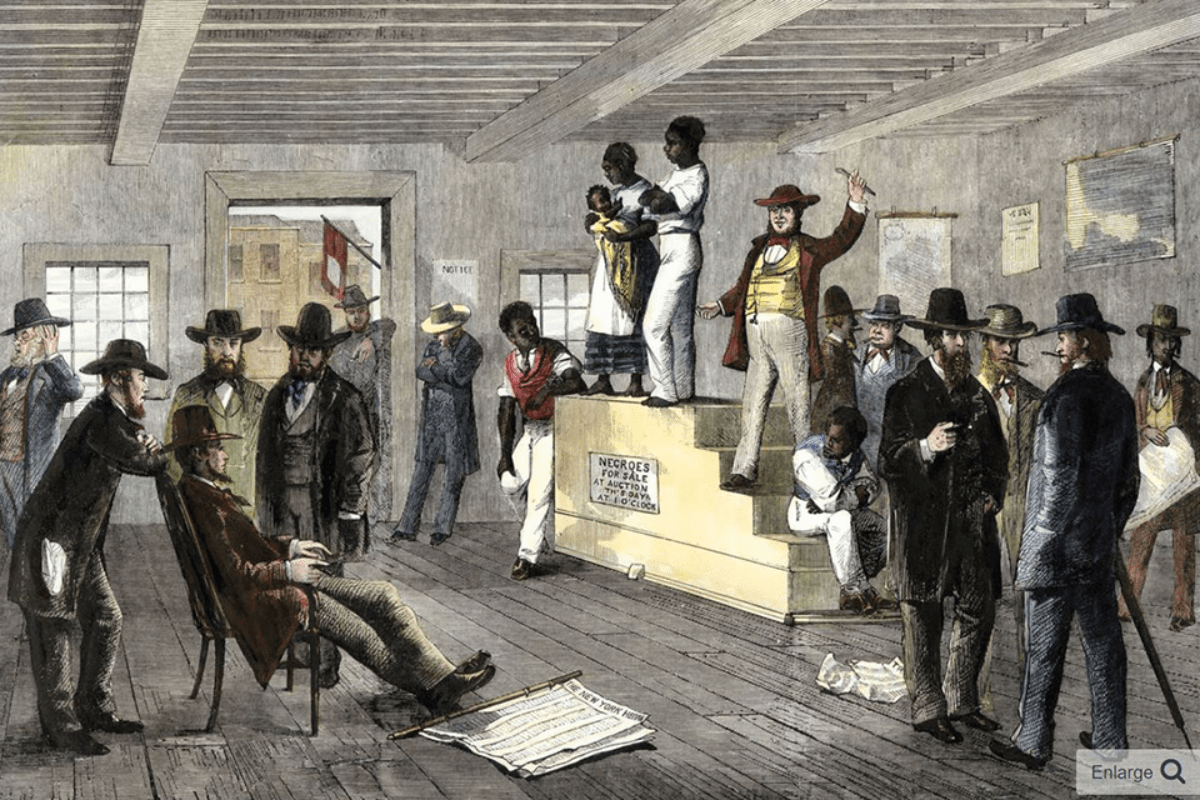 According to this story, told by Steve Brown in his book Scandalous Freedom, Lincoln once visited a slave market. There, he saw a young girl being auctioned and began to bid on her. He ended up with the high bid and bought the young lady, after which she was brought to him. He told her, “Young lady, you are free.”
Not fully understanding, she questioned, “Please, sir, what does that mean?”
He answered, “It means you are free.” She replied, “Does that mean that I can say whatever I want to say?”
Lincoln told her, “Yes, my dear, you can say whatever you want to say and go wherever you want to go.”
With tears streaming down her face, she said, “Then what I want to say is that I want to go with you.”
This tale is both moving and heart-rending, but I’ve never found any confirmation that these events ever took place. What I did find was a true story about a case that Lincoln argued before the Illinois Supreme Court that resulted in the freedom of a young slave woman—20 years before he became president.
Nance Legins-Costley had spent her entire life in servitude to two masters, the second of which had acquired her as part of a sale to resolve the debts of her first master. Nance was never able to read, but she appears to have been very savvy and she endeavored to file suit in court to secure her freedom because she never assented to her own sale.
Having lost that first case, in 1836, she was sent by her master to serve another man, David Bailey, to resolve another debt. Bailey was an abolitionist, which largely gave her the freedom she desired, though she was not truly free in the eyes of the law. After her owner died, a relative sought to get payment from Bailey for Nance. Bailey refused and took the case to court. The attorney he chose to represent him? Abraham Lincoln.
At that point, Lincoln was against slavery in principle, but he wasn’t an outright abolitionist. Still, in the course of preparing for arguments before the Illinois Supreme Court, he spent time talking with Nance, and it seems to have solidified his stance firmly against slavery. His arguments, made in July 1841, must have resonated with the court, as it ruled that, “It is a presumption of law, in the State of Illinois, that every person is free, without regard to color. … The sale of a free person is illegal.”
As a result of this case, Nance—and her three children—became the first four people that Lincoln would help free from slavery. That number later expanded into millions following the Emancipation Proclamation.
The reality is that each of us has a lot in common with Nance. We were all born into slavery, and we needed an advocate to help free us from our bondage. You can look at it as a purchase—Jesus shedding His blood as an exchange for our sins. Or you can look at it as Jesus as the mediator before the Father, appealing to the judge in the highest of all courts to free us from our sinful bonds. In either case, there’s no way that we could ever be free if we tried to escape from sin on our own.
And our response? Just as in the first story, our reaction should be to immediately say to the Lord, “I want to go with you.” It’s not enough for us to simply attain our freedom and then seek our own path. The only way for us to live truly free lives is to follow the path of the one who paid our ransom. Just as we must admit that we can’t deliver ourselves from sin, we must also admit that we’re powerless to live as children of God unless we allow Him to have total control of our lives. Only then will we have the real freedom that we desire.
Reflection copyright © 2025 Doug DeBolt and Charles Fulton.
